

• About us
  • Advertise with us
  • Subscribe Now
  • Media Kit
Saturday, January 31, 2026
Livestock & Poultry Middle East
Text in HTML
MIDDLE EAST'S HIGHEST
CIRCULATING LIVESTOCK &
POULTRY MAGAZINE WITH PRINT & ONLINE READERSHIPS
  • Home
  • News
  • Videos
  • Industry Update
    • Animal Feeds & Nutrition
    • Dairy Products
    • Farming Equipment
    • Animal Health & Hygiene
    • Aquaculture
    • Livestock Farming
    • Meat & Processing
    • Poultry Farming
  • Country Update
  • Digital Magazines
    • Publications
  • Events
  • Careers
  • Contact Us
No Result
View All Result
  • Home
  • News
  • Videos
  • Industry Update
    • Animal Feeds & Nutrition
    • Dairy Products
    • Farming Equipment
    • Animal Health & Hygiene
    • Aquaculture
    • Livestock Farming
    • Meat & Processing
    • Poultry Farming
  • Country Update
  • Digital Magazines
    • Publications
  • Events
  • Careers
  • Contact Us
No Result
View All Result
Live Stock Middle East
No Result
View All Result
Home News

Animal Welfare Regulation Issued, Opening Wider Opportunities for Cage-Free Egg Development

by Livestock & Poultry News Desk
4 weeks ago
in News
0
Animal Welfare Regulation Issued, Opening Wider Opportunities for Cage-Free Egg Development
ShareShareShareShareShare

The Government of Indonesia has officially issued Minister of Agriculture Regulation (Permentan) No. 32 of 2025 on the Implementation of Animal Welfare. This regulation serves as a key legal foundation to ensure that livestock management practices are aligned with animal welfare principles. In addition, it supports poultry production systems that meet animal welfare standards, including cage-free egg production systems.

The Director of Veterinary Public Health at the Indonesian Ministry of Agriculture, I Ketut Wiratha, emphasized that rising food demand requires livestock production systems that prioritize not only efficiency but also ethical principles. According to him, animal welfare is closely linked to livestock productivity, food safety, and public trust. He stressed that animal welfare is not merely a moral issue, but an essential element in safeguarding food quality and ensuring the sustainability of the livestock sector. He also added that animal welfare forms part of Indonesia’s global commitments under the One Health framework and the Sustainable Development Goals (SDGs).

He further noted that public awareness regarding the ethical treatment of animals continues to grow, with consumers becoming increasingly critical of how animals are raised and slaughtered. Therefore, continuous education and sustained oversight along the entire food production chain are crucial to encouraging changes in attitudes and behaviors toward practices that place greater emphasis on animal welfare, he explained during an online event on Wednesday (31/12/2025).

Following the issuance of the regulation, the government will proceed with the development of technical guidelines for animal welfare certification and the preparation of human resources to support its implementation. The certification process will be carried out by local governments through agencies responsible for livestock and animal health.

As a result, one of the government’s key priorities going forward is to train and deploy auditors across various regions, ensuring that the socialization and certification of animal welfare practices can be implemented more broadly, effectively, and practically. This certification is expected to open new market opportunities and enhance the competitiveness of Indonesian livestock products—particularly cage-free eggs—both in domestic and global markets, he added.

Previously, the Head of the Animal Welfare Implementation Team at the Directorate of Veterinary Public Health, Septa Walyani, DVM, MSc, explained that the adoption of cage-free systems is important because it allows laying hens to express their natural behaviors, which is a core indicator of animal welfare.

She noted that numerous studies have shown that cage-free housing environments for laying hens can reduce stress levels and disease risks. As a result, the use of antibiotics can be reduced, contributing to global efforts to prevent antimicrobial resistance, she explained in Jakarta on Thursday (11/12/2025).
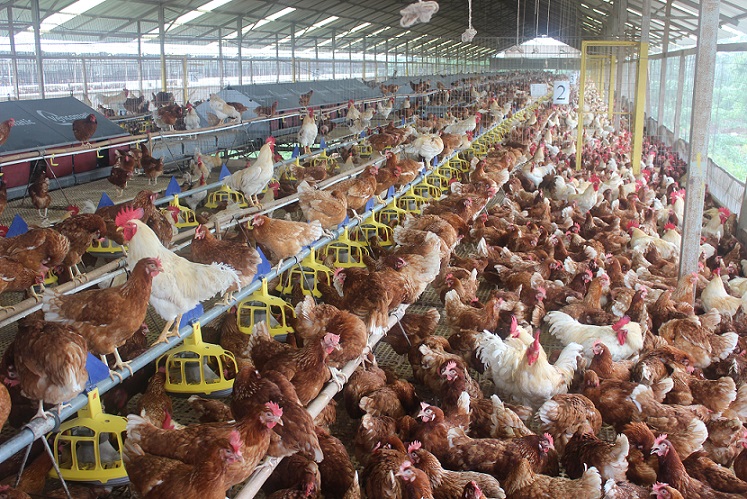
Cage-free laying hen systems allow chickens to express their natural behaviors, supporting better animal welfare outcomes

This view is reinforced by findings from the European Food Safety Authority (EFSA), which indicate that the risk of Salmonella is higher in battery cage systems compared to cage-free systems. Based on an analysis of data from 5,000 farms across 24 countries, EFSA reported that cage-free egg farms recorded significantly lower levels of Salmonella contamination—up to 25 times lower for certain strains—than conventional laying hen farms.

Responding to the issuance of the regulation, Sandi Dwiyanto, Sustainable Poultry Program Manager at Lever Foundation, expressed his appreciation for the Indonesian government’s move, describing it as aligned with global developments. According to him, the regulation sends a strong signal to industry stakeholders

that animal welfare is increasingly integrated with market demands and global corporate commitments, particularly in relation to cage-free egg sourcing.

He added that in recent years, global food companies’ commitments to using cage-free eggs have increased significantly. The regulation provides direction and regulatory certainty for a more structured transition in Indonesia. This development is also in line with shifting consumer preferences that drive demand for more responsible and sustainable production systems. With this regulation in place, Indonesia now has a stronger foundation to meet global market expectations.

This trend is further reinforced by a consumer survey conducted by Lever Foundation in collaboration with GMO Research in July 2025. The survey found that a majority of respondents (72%) believe that hotels, restaurants, supermarkets, packaged food companies, and similar businesses should exclusively use cage-free eggs in their supply chains. In terms of pricing, 71% of respondents indicated a willingness to pay a premium of 10–40% for cage-free eggs. In the restaurant context, 72% of respondents were willing to pay more for menu items made with cage-free eggs, with most still accepting price increases of 5–20% per serving.

These findings are consistent with the growing number of food companies and global hotel chains in Indonesia that have made commitments or are in the process of adopting cage-free egg policies, including KFC, Burger King, The Coffee Bean & Tea Leaf, Nestlé, Hyatt, Marriott, The Peninsula Hotels, and Aman Group, among others. Notably, Swiss-Belhotel International Indonesia has announced a comprehensive commitment to fully transition to cage-free eggs across all 91 of its hotel properties. Similar commitments are also increasingly being made by Indonesia-based companies such as Superindo, Ismaya, Bali Budha, and Jiwa Jawi.

Post Views: 424

Related posts

6 Key Performance Indicators for Measuring Feed Production Throughput

6 Key Performance Indicators for Measuring Feed Production Throughput

January 30, 2026
Dubai Makes History as Gulfood Takes Over Two Mega Venues and Unveils the Expanded Dubai Exhibition Centre at Expo City

Dubai Makes History as Gulfood Takes Over Two Mega Venues and Unveils the Expanded Dubai Exhibition Centre at Expo City

January 26, 2026
EuroTier 2026: Exhibitor Registration Open For Attractive Special Areas

EuroTier 2026: Exhibitor Registration Open For Attractive Special Areas

January 23, 2026
Five New Studies at IPSF 2026 Show How Targeted Nutrition Helps Poultry Producers Get More from Feed

Five New Studies at IPSF 2026 Show How Targeted Nutrition Helps Poultry Producers Get More from Feed

January 21, 2026
Quality, Food Safety, and Variety: Spain’s Reliable Value Proposition for the International Market

Quality, Food Safety, and Variety: Spain’s Reliable Value Proposition for the International Market

January 19, 2026
Gulfood 2026 Launches Gulfood Logistics Reflecting Strategic Importance of Supply Chains in Driving the World’s Food Economy

Gulfood 2026 Launches Gulfood Logistics Reflecting Strategic Importance of Supply Chains in Driving the World’s Food Economy

January 16, 2026
ShareShareTweetSendPin
Previous Post

UTRIX Launches a Poultry Performance Enhancer and 6 New Liquid Feed Solutions in the Lebanese Market

Next Post

Poultry Asia is returning in 2026 at World Trade Centre Kuala Lumpur, Malaysia!

Next Post
Poultry Asia is returning in 2026 at World Trade Centre Kuala Lumpur, Malaysia!

Poultry Asia is returning in 2026 at World Trade Centre Kuala Lumpur, Malaysia!

Oct- Dec 2025 edition

RECOMMENDED NEWS

Why weigh broilers?

Why weigh broilers?

2 years ago
New Aviagen Toolkit Puts Broiler Gut Health in Focus

New Aviagen Toolkit Puts Broiler Gut Health in Focus

5 months ago
EMEAA Broiler School Enhances Broiler Management Focus

EMEAA Broiler School Enhances Broiler Management Focus

2 years ago
Ebenfeld Hutterian Brethren Enhances Poultry Production with BioTherm’s Cutting Edge Heating System

Ebenfeld Hutterian Brethren Enhances Poultry Production with BioTherm’s Cutting Edge Heating System

2 years ago

FOLLOW US

BROWSE BY CATEGORIES

  • Animal Feeds & Nutrition
  • Animal Health & Hygiene
  • Aquaculture
  • Country Update
  • Dairy Products
  • Draft
  • Editor's Pick
  • Events News
  • Farming Equipment
  • Industry Update
  • Livestock Farming
  • Meat & Processing
  • Media Kit
  • News
  • Poultry Farming
  • Sponsored News
  • Video

BROWSE BY TOPICS

Adnec Al Ain alltech animal animal biosolutions Animal nutrition brenntag calves chickens cow health DAIRY dsm egg eggprocessing Equestrian event farming fee feed feed ingredients fish health HOOVES horse horse feed Hunting insect farming Ishida livestock marel meat processing middle east milk production Novonesis Novus petfood poultry poultry feeds poultry line poultry production shrimp sommet swine Thumbay veterinary clinic
Livestock & Poultry Middle East

Leading Livestock & Poultry Industry Magazine in the Gulf & Middle East Region

Follow us on social media:

Recent News

  • 6 Key Performance Indicators for Measuring Feed Production Throughput
  • Tradition, Innovation, and Convenience of Spanish Canned Fish and Seafood: A Category Aligned with Global Trends
  • Dubai Makes History as Gulfood Takes Over Two Mega Venues and Unveils the Expanded Dubai Exhibition Centre at Expo City
  • JAPANESE WAGYU FROM JAPAN : Gulfood Trade Centre Arena S-H2

Category

  • Animal Feeds & Nutrition
  • Animal Health & Hygiene
  • Aquaculture
  • Country Update
  • Dairy Products
  • Draft
  • Editor's Pick
  • Events News
  • Farming Equipment
  • Industry Update
  • Livestock Farming
  • Meat & Processing
  • Media Kit
  • News
  • Poultry Farming
  • Sponsored News
  • Video

Recent News

6 Key Performance Indicators for Measuring Feed Production Throughput

6 Key Performance Indicators for Measuring Feed Production Throughput

January 30, 2026
Tradition, Innovation, and Convenience of Spanish Canned Fish and Seafood: A Category Aligned with Global Trends

Tradition, Innovation, and Convenience of Spanish Canned Fish and Seafood: A Category Aligned with Global Trends

January 27, 2026
  • About us
  • Advertise with us
  • Subscribe Now
  • Media Kit

© 2026 LIVESTOCK & POULTRY ME & ASIA

No Result
View All Result
  • Home
  • News
  • Videos
  • Industry Update
    • Animal Feeds & Nutrition
    • Dairy Products
    • Farming Equipment
    • Animal Health & Hygiene
    • Aquaculture
    • Livestock Farming
    • Meat & Processing
    • Poultry Farming
  • Country Update
  • Digital Magazines
    • Publications
  • Events
  • Careers
  • Contact Us

© 2026 LIVESTOCK & POULTRY ME & ASIA

Subscribe to our newsletter and online magazine

Subscription Form -pop up