

Author: Site Editor
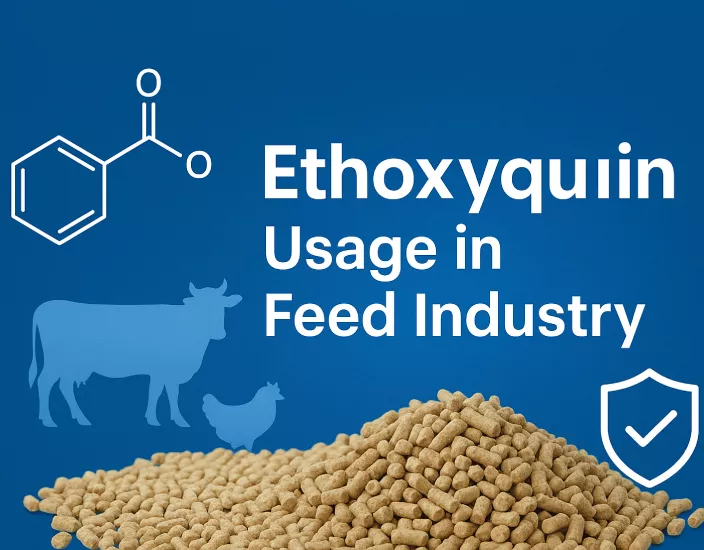
Ethoxyquin is a synthetic antioxidant widely used in the animal feed industry to enhance feed stability and protect nutrient integrity. It helps maintain the quality of feeds during production, transport, and storage—particularly in formulations containing oils, fats, or sensitive vitamins.
This article explores the key functions, recommended applications, safety concerns, and regulatory status of ethoxyquin as a feed additive.
What Is Ethoxyquin?
Ethoxyquin is a synthetic antioxidant (chemical formula C₁₄H₁₉NO) originally developed in the 1950s. It is widely used in the animal feed industry to prevent the oxidation of fats, oils, and fat-soluble vitamins such as vitamin A and vitamin E. Oxidation can lead to nutrient loss, rancidity, and reduced feed palatability—making antioxidants like ethoxyquin essential for preserving feed quality.
Ethoxyquin is typically available in both liquid and powder forms, with ethoxyquin 66 powder being the most commonly used grade in commercial feed production. It is valued for its high antioxidative efficiency, stability under high temperatures, and long-lasting protective effect, even at low inclusion rates.
By slowing down oxidative degradation, ethoxyquin helps maintain the nutritional value, aroma, and appearance of feed during storage and transportation.
Key Benefits of Ethoxyquin in Feed
Ethoxyquin is widely recognized for its powerful antioxidant properties and plays a crucial role in maintaining feed quality throughout processing, storage, and distribution. Its benefits include:
Prevents Oxidation of Fats and Oils
Ethoxyquin protects feed ingredients from oxidative degradation, reducing the risk of rancidity and maintaining the freshness and energy value of the feed.
Preserves Sensitive Nutrients
It stabilizes essential vitamins such as vitamin A, vitamin E, and carotenoids, which are highly prone to oxidation during feed production and storage.
Extends Shelf Life
By slowing down nutrient loss and preventing off-odors caused by fat breakdown, ethoxyquin significantly extends the shelf life of feed products.
Maintains Feed Palatability and Color
Ethoxyquin helps preserve the original taste, aroma, and appearance of feed, supporting consistent intake by animals.
Effective at Low Inclusion Rates
Even in small amounts, ethoxyquin delivers strong antioxidant performance, making it a cost-effective solution for feed manufacturers.
Ideal for High-Fat and Marine-Based Diets
Feeds containing fishmeal, animal fats, or other lipid-rich ingredients benefit greatly from ethoxyquin’s stabilizing effect.
Application of Ethoxyquinoline in Feed Industry
Ethoxyquin is primarily applied in the feed industry as an antioxidant additive to preserve feed quality during processing, storage, and distribution. Its applications span a wide range of feed types and production scenarios. Key areas of application include:
Related posts





1. In Premix and Compound Feed Production
Ethoxyquin is commonly added to vitamin-mineral premixes and complete compound feeds to prevent oxidative degradation of fats and sensitive micronutrients during manufacturing and storage.
2. In High-Fat Formulations
Feeds with high levels of animal fats, fish oil, or plant-derived oils are especially prone to rancidity. Ethoxyquin is used in these feeds—particularly for poultry, swine, and aquaculture—to stabilize lipids and maintain energy value.
3. In Aquafeed
Ethoxyquin is extensively used in aquaculture feed, especially those containing fishmeal or fish oil, which are highly susceptible to oxidation. It helps maintain the nutritional integrity and sensory properties of fish feed over time.
4. In Pet Food Manufacturing
Although usage is more regulated in pet food, ethoxyquin is still applied in certain formulations—mainly dry kibble containing meat and fat—to ensure freshness and palatability.
Safety Considerations and Global Regulations
While ethoxyquin is effective, its use has been reviewed by regulatory authorities due to concerns about residues and long-term exposure.
United States (FDA): Approved with established maximum residue levels (MRLs)
European Union: Authorization suspended pending further safety assessments by EFSA
China and Southeast Asia: Permitted within national regulatory frameworks
Manufacturers should monitor regulatory developments and ensure compliance, especially for export-oriented feed products.
Alternatives to Ethoxyquin
While ethoxyquin has been a widely used antioxidant in animal feed for decades, increasing regulatory scrutiny—especially in the European Union—has led to growing interest in alternative solutions. Several natural and synthetic antioxidants are now used as substitutes, offering varying degrees of stability, efficacy, and regulatory approval.
1. Butylated Hydroxyanisole (BHA) and Butylated Hydroxytoluene (BHT)
These synthetic antioxidants are commonly used as direct replacements for ethoxyquin.
They are effective in preventing fat oxidation and are approved in many countries for feed applications.
Often used in combination for synergistic effects.
2. Tertiary Butylhydroquinone (TBHQ)
A powerful synthetic antioxidant used in both human food and animal feed.
Provides excellent oxidative protection, especially in high-fat feed formulations.
3. Natural Antioxidants (Tocopherols)
Mixed tocopherols (vitamin E-based compounds) are popular natural alternatives to ethoxyquin.
Though less potent than synthetic options, they appeal to markets focused on clean labels and natural sourcing.
Often used in pet food and premium livestock feed.
4. Rosemary Extract
A natural plant-derived antioxidant increasingly used in organic or specialty feeds.
Provides moderate oxidative stability and is approved in many regions as a feed additive.
5. Ascorbyl Palmitate (Fat-Soluble Vitamin C)
Sometimes used alongside tocopherols to enhance antioxidant effect.
Suitable for formulations where synthetic antioxidants are restricted.
Conclusion
Ethoxyquin remains a reliable and cost-effective antioxidant in animal nutrition, particularly for feeds rich in fats or vulnerable to oxidation. When applied correctly and within approved limits, it supports feed quality, nutrient preservation, and storage stability.
As global regulations evolve, feed producers should stay informed and evaluate both synthetic and natural antioxidant strategies to meet quality and compliance goals.
Polifar supplies high-quality ethoxyquin 66 powder and a full range of feed antioxidants. Contact us for customized solutions that match your production needs.
For more information please visit, https://www.polifar.com/