

• About us
  • Advertise with us
  • Subscribe Now
  • Media Kit
Thursday, April 2, 2026
19 °c
Columbus
19 ° Wed
20 ° Thu
22 ° Fri
19 ° Sat
Livestock & Poultry Middle East
  • Home
  • News
  • Videos
  • Industry Update
    • Animal Feeds & Nutrition
    • Dairy Products
    • Farming Equipment
    • Animal Health & Hygiene
    • Aquaculture
    • Livestock Farming
    • Meat & Processing
    • Poultry Farming
  • Country Update
  • Digital Magazines
    • Publications
  • Events
  • Careers
  • Contact Us
No Result
View All Result
  • Home
  • News
  • Videos
  • Industry Update
    • Animal Feeds & Nutrition
    • Dairy Products
    • Farming Equipment
    • Animal Health & Hygiene
    • Aquaculture
    • Livestock Farming
    • Meat & Processing
    • Poultry Farming
  • Country Update
  • Digital Magazines
    • Publications
  • Events
  • Careers
  • Contact Us
No Result
View All Result
Live Stock Middle East
No Result
View All Result
Home Editor's Pick

Time to Rethink Weaning: Why Smarter Strategies Deliver Stronger Biological and Economic Outcomes in Dairy Calves

by Livestock & Poultry News Desk
2 months ago
in Editor's Pick, News, Sponsored News
0
Time to Rethink Weaning: Why Smarter Strategies Deliver Stronger Biological and Economic Outcomes in Dairy Calves

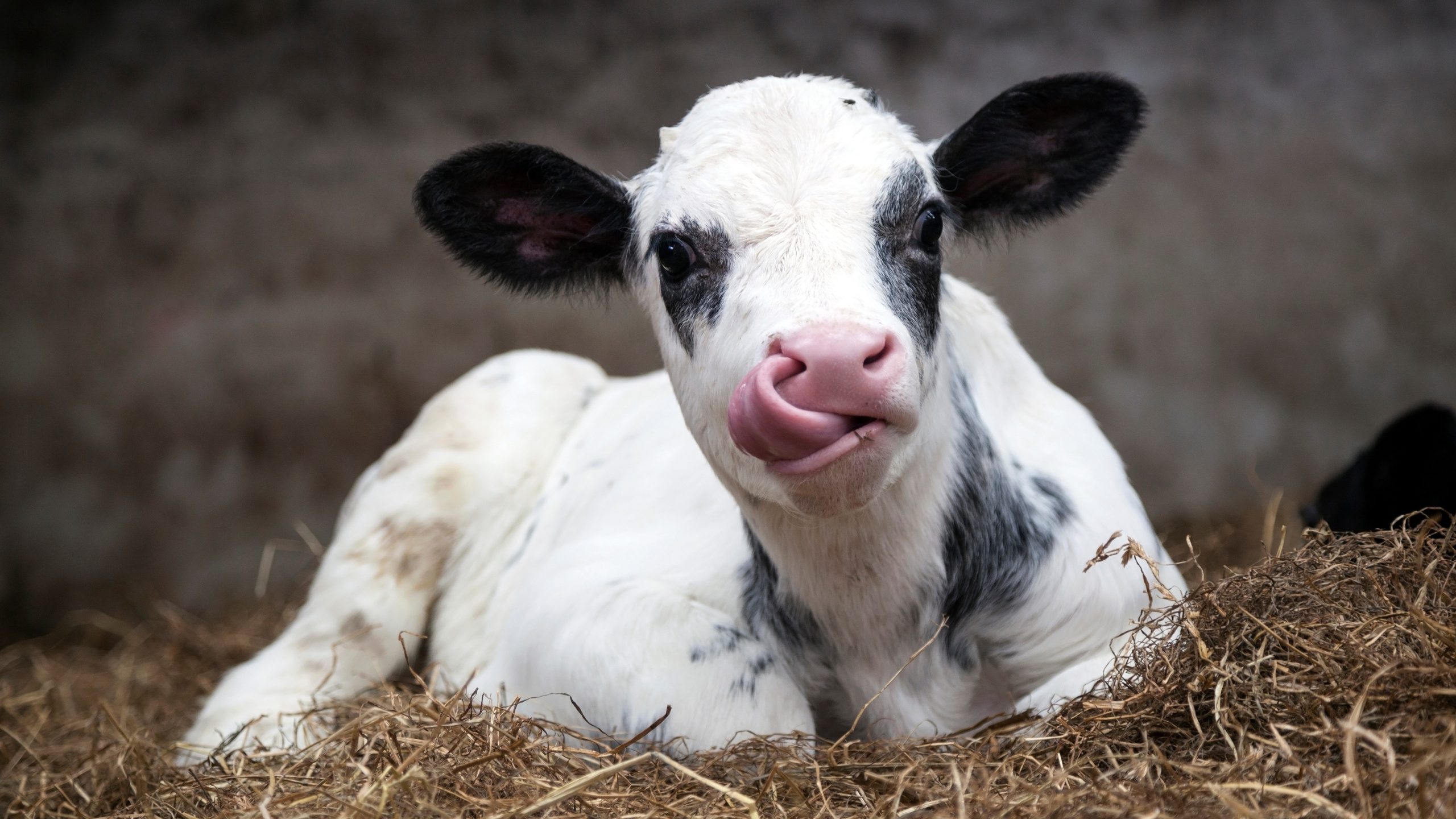
very young black and white calf in straw of barn with tongue up its nose

ShareShareShareShareShare

Young dairy animals shape the future productivity of every herd. Their successful rearing determines not only the genetic progress of the operation but also its long-term economic sustainability. However, the period from birth to first calving is often viewed as merely a cost center instead of the long-term investment in the future of the herd that it truly is.

It is expensive to raise dairy heifers from birth to their first calving. They do not generate income until their first lactation period. Overfeeding and underfeeding can both drive up costs in different ways. Too much feed puts unnecessary strain on the budget, while too little delays first calving and extends the non-productive period. Focusing solely on short-term expenses when considering early-life management misses the bigger picture because well-managed heifer rearing is one of the most impactful investments a dairy farm can make in terms of future performance and productivity.

The True Cost of Raising Replacements.

Several studies have quantified the cost of raising a dairy heifer from birth to first calving. These costs vary widely depending on the production system, region, and breed. In the United States, the average cost per animal is reported to be $1,803 ± $339. Simulation models estimate the cost to be $1,919 for barn systems, $1,594 for dry-lot systems, and $1,336 for pasture-based systems. In the Netherlands, the cost is approximately €1,790 per heifer. In Brazil, estimates range from $1,821 ± $44 for intermediate systems to $2,006 ± $63 for lower-performing operations. The upper tier averages $1,885 ± $63.

Significant investments are made in calf rearing from birth to weaning, particularly in high-quality milk replacers and starter feeds. These account for roughly 40–50 % of total rearing costs. However, attention often declines around the time of weaning, even though this is a critical transition period that strongly influences long-term health, growth, and future productivity. Inadequate management during this stage can undermine the returns on early investments by compromising the gains achieved during the initial and cost-intensive rearing period.

A Critical Phase: Weaning.

Weaning is one of the most significant yet underestimated milestones in calf rearing. It marks the transition from milk to solid food, which challenges the calf’s digestive, immune, and behavioral systems. Mistakes during this period can undermine months of careful management and lead to long-term consequences.

Between 12 % and 35 % of live-born calves never reach their first calving. Of those that do, 17 % fail to complete a second lactation. Overall, approximately one-third of replacement calves do not contribute positively to herd profitability. Even among surviving animals, nutritional management and weaning practices have long-lasting effects. Consistent underfeeding or abrupt weaning results in cumulative productivity losses across multiple lactations, leading to lifetime milk yield deficits of 800 – 1,500 kg per cow. This corresponds to a 5 – 8 % reduction in total milk yield and shorter herd longevity by about 0.15 years (roughly 55 days).

Pre-Weaning Growth: The Most Economical Growth.

Feed conversion efficiency is highest during the first 2 months of life, typically ranging from 2.0 to 2.5:1 (for milk and starter feed), making early growth the most economical phase of development (Figure 1). When managed properly, the significant investment in milk replacers and starter feeds are worthwhile as they are efficiently converted into growth.

For more information: Biochem – Feed Safety for Food Safety

Post Views: 611

Related posts

A New Era of High‑Yield Performance- Cobb800™

A New Era of High‑Yield Performance- Cobb800™

April 1, 2026
Smart Feeding Strategies for Dairy Calves Using Milk Replacers- A Practical Guide for Progressive Dairy Farmers

Smart Feeding Strategies for Dairy Calves Using Milk Replacers- A Practical Guide for Progressive Dairy Farmers

March 30, 2026
How low-dose feed technologies enhance complex diets for higher efficiency and return on investment

How low-dose feed technologies enhance complex diets for higher efficiency and return on investment

March 28, 2026
Building on a Decade of Research, NOVUS Welcomes Julien Kanarek to Guide Enzyme Growth

Building on a Decade of Research, NOVUS Welcomes Julien Kanarek to Guide Enzyme Growth

March 26, 2026
2026 Alltech Asia Import Risk Analysis highlights key regional and animal-specific mycotoxin concerns

2026 Alltech Asia Import Risk Analysis highlights key regional and animal-specific mycotoxin concerns

March 24, 2026
From Animal Feed to Health: VIV Health & Nutrition Asia 2026 Concludes on a High Note

From Animal Feed to Health: VIV Health & Nutrition Asia 2026 Concludes on a High Note

March 20, 2026
ShareShareTweetSendPin
Previous Post

Evonik marks 50 years at IPPE with focus on amino acids, supply security and feed quality services

Next Post

Akralos Animal Nutrition debuts, delivering advanced feed and nutrition solutions across North America

Next Post
Akralos Animal Nutrition debuts, delivering advanced feed and nutrition solutions across North America

Akralos Animal Nutrition debuts, delivering advanced feed and nutrition solutions across North America

Jan- Mar 2026 edition

RECOMMENDED NEWS

7 Ways Feed Quality Supports Sustainable Poultry Farming

7 Ways Feed Quality Supports Sustainable Poultry Farming

1 year ago
Healthier animals, lower costs: a win for your business

Healthier animals, lower costs: a win for your business

1 year ago
Create value with cubing

Create value with cubing

1 year ago
Invisible stressors: When unseen challenges limit performance

Invisible stressors: When unseen challenges limit performance

1 month ago

FOLLOW US

BROWSE BY CATEGORIES

  • Animal Feeds & Nutrition
  • Animal Health & Hygiene
  • Aquaculture
  • Country Update
  • Dairy Products
  • Draft
  • Editor's Pick
  • Events News
  • Farming Equipment
  • Industry Update
  • Livestock Farming
  • Meat & Processing
  • Media Kit
  • News
  • Poultry Farming
  • Sponsored News
  • Video

BROWSE BY TOPICS

Adnec Al Ain alltech animal animal biosolutions Animal nutrition brenntag calves chickens cow health DAIRY dsm egg eggprocessing Equestrian event farming fee feed feed ingredients fish health HOOVES horse horse feed Hunting insect farming Ishida livestock marel meat processing middle east milk production Novonesis Novus petfood poultry poultry feeds poultry line poultry production shrimp sommet swine Thumbay veterinary clinic
Livestock & Poultry Middle East

Leading Livestock & Poultry Industry Magazine in the Gulf & Middle East Region

Follow us on social media:

Recent News

  • A New Era of High‑Yield Performance- Cobb800™
  • Smart Feeding Strategies for Dairy Calves Using Milk Replacers- A Practical Guide for Progressive Dairy Farmers
  • How low-dose feed technologies enhance complex diets for higher efficiency and return on investment
  • Building on a Decade of Research, NOVUS Welcomes Julien Kanarek to Guide Enzyme Growth

Category

  • Animal Feeds & Nutrition
  • Animal Health & Hygiene
  • Aquaculture
  • Country Update
  • Dairy Products
  • Draft
  • Editor's Pick
  • Events News
  • Farming Equipment
  • Industry Update
  • Livestock Farming
  • Meat & Processing
  • Media Kit
  • News
  • Poultry Farming
  • Sponsored News
  • Video

Recent News

A New Era of High‑Yield Performance- Cobb800™

A New Era of High‑Yield Performance- Cobb800™

April 1, 2026
Smart Feeding Strategies for Dairy Calves Using Milk Replacers- A Practical Guide for Progressive Dairy Farmers

Smart Feeding Strategies for Dairy Calves Using Milk Replacers- A Practical Guide for Progressive Dairy Farmers

March 30, 2026
  • About us
  • Advertise with us
  • Subscribe Now
  • Media Kit

© 2026 LIVESTOCK & POULTRY ME & ASIA

No Result
View All Result
  • Home
  • News
  • Videos
  • Industry Update
    • Animal Feeds & Nutrition
    • Dairy Products
    • Farming Equipment
    • Animal Health & Hygiene
    • Aquaculture
    • Livestock Farming
    • Meat & Processing
    • Poultry Farming
  • Country Update
  • Digital Magazines
    • Publications
  • Events
  • Careers
  • Contact Us

© 2026 LIVESTOCK & POULTRY ME & ASIA

Subscribe to our newsletter and online magazine

Subscription Form -pop up