



Tharparkar, a district spread over 20,000sq kilometers, lies in Pakistan‘s southern Sindh province. But the region paints a picture of beauty and adversity, for beneath the alarming mortality figures are deeper issues hampering human existence in this geographically, culturally and religiously. The Thar desert is mainly characterized by a marginal and diversified agriculture, reflecting the interaction of soil type and crops diversification, livestock grazing and crops management, migration in lean periods for livestock feeding and off-farm work. Monsoon rains are the only wet period in the desert. Kharif cropping is the main possibility, fully dependent on monsoon rains. Low crop productivity results in deficit food production. Crop yields are mainly low except when there is heavy and timely rainfall. Therefore, livestock becomes the major stabilizing factor for sustaining agriculture.
Livestock management: The livestock is an important component of the farming system. However, raising livestock is not easy and becomes tough in the drought months from February to May-June. These are the months when farmers have to cover large distance along with their livestock in search of grazing rangelands. They travel towards west and ultimately reach in the neighboring districts of Umerkot and Mirpurkhas etc. thus putting lot of pressure on the fodder resources of those areas. In Thar Desert cattle, camel, donkey, sheep and goat are the common types of livestock.

Livestock feeding: In the study area, about 62 per cent farmers feed crop residues of millet and guar for feeding their livestock in the months of fodder shortage (December to June). 23% farmers reported that they did not use any crop residues. No effort has been visible by the farmers to cut and store grasses which are in abundance in the rainy season and use it for feeding their livestock in the drought months. There is a need to think about this possibility and recommendations should be made in this regard. Stall-feeding is a common in the Thar desert. Only the milk animals, when they are milking are stall fed during the months of December to July i.e., the month of occurrence of rainfall. Common concentrates that they use are guar, millet grindings, and wheat and rice bran and wheat bhusa.
Grazing patterns: The concept of stall feeding to livestock is not common in Thar and mostly livestock depends upon field grazing in the ranges as well as in the fields adjacent to the goths when there are no crops. Average grazing distance from the village is about three kilometers. Grazing of livestock is mostly a male dominant activity. Eighty per cent reported that one male adult looking after the grazing activity, whereas the remaining 20 per cent reported more than one person for the same activity. Usually in this situation, a different person for day and night shifts goes for grazing. In about 25 per cent of families, children were also involved in grazing of the livestock. It is important to point out at this stage that overgrazing is a big problem in the desert and this situation is rapidly moving towards depletion of endangered palatable grass species in the area. It is urgently needed that some sort of control should be imposed so that grazing activity can be carried out at an optimum level for obtaining maximum benefit out of rangeland resources.
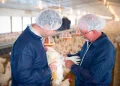
Livestock disease: Animal health was found to be an area where a lot of improvement is needed. It is the only cash surety with the farmers in the hour of need. In the incidence of disease, mostly veterinary care is not available and the farmers have to depend on traditional methods as well as to seek the advice of spiritual leaders. Mortality rates in the event of disease were found to be quite high in case of sheep, goat and donkeys as compared to other animals.
Milk yields: Cows and sheep/goat were the main milk producing animals. When there was sample of grass available in the range’s cows produced almost double milk than that was produced in the deficit period. The pattern was of low to light milk yield with respect to rainfall zones. Similar pattern was found in the milk yield produced by sheep/goat.
Livestock limitations: the major constraints faced by them while raising the livestock. They mentioned scarce grazing, drought, marketing and disease. Due to the non-availability of a livestock market nearby the livestock is sold usually in the villages where lesser rates are offered by beoparies. High mortality rates were due to the unavailability of the veterinary hospitals in the Thar area.
Migration behavior: In the dry period which normally starts from the month of December and January unless there is a very good year (meaning abundant rains), farmers of the Thar Desert start a temporary migration to the areas in the interior Sindh in search food for their livestock. Usually their migration involves male family members who take along their livestock herd and look after the dry period in the irrigated areas. But sometimes, this migration involves all the family members moving along with their children and livestock for the same period and travels long distances (i.e., more than 200km) in Nagarparkar. Although their return to Thar depends upon the rainfall, however an overwhelming majority (85 per cent) reported that they are back by June, July and August. While migrating, the farmers have to travel long distance to reach the places where they can find food and feed for themselves as well as for their livestock. Farmers from Nagarparkar were travelling an average distance of 220km followed by those living in Chacharo (154km). Dhaali (110 Km) Islamkot (45kms) Even the farmers in Umerkot taluka which is at the border of the desert, they have to travel 120km comparatively, less distances were covered by farmers in Mithi (89km) and Diplo (82km). While in the interior Sindh migratory. Only 70% they stayed on their own and do not want to be categorized as above. When these migrants return back to Thar, they bring along some of the livestock of their friends and relatives where they stayed. This puts even more pressure on the already scarce resources of the rangelands of Thar. Livestock production is the dominant activity of the desert economy. It plays an important role by ensuring subsistence and security against crop failures under drought conditions. Besides, it is also a status symbol in the area. Presence of better ranges in high rainfall zone helps farmers to raise more animal unit. Farmers in the high rainfall zone were keeping significantly higher number of animal units. The stall feeding of animals generally starts when the grazing forages are not available in rangelands. It starts in December and end in April. The results show that two third of farmers stall-feed their animals during December-January. The crop residues and concentrates are commonly used for stall-feeding. The farmers keep millet, guar and moth residues to feed their animals during fodder scarcity period. Tree leaves and dry grasses were also preserved as high for stall-feeding. Farmers also purchase bhusa from the irrigated areas of Sindh to meet fodder deficits.
Animal diseases are common problem in Thar majority of 85 % reported that no veterinary personnel have visited the villages. As livestock are important components of Thar farming system. There is a need to conduct further research to document the animals’ production differential and their implications for animal breed improvements. Animal health is also important for profitable livestock production. It may be improved by effective breeding and feeding programme along with provision of on time veterinary aid to the farmers. Technical training about vaccination may be arranged through crash programme. This would be a good step by the government towards promoting pastoral economy. Tharparkar district is one of the biggest potential livestock market zones in Sindh and needs to focus on planning to promote the livestock sector. The current estimated livestock population of Tharparkar district is above six million. Most people of the area depend on agro pastoral economy for their livelihood. livestock, fully or partially, contributes to the economy of every household of about 1.6 million people of the district. Thar must be given priority in matters of livestock development. Authorities should devise a holistic livestock development plan to include introducing cross-breeds, promote dairy farming, taking measures for widening the livestock health improvement facilities, install the solar water pump for animals introducing low-priced easily available livestock fodder and further developing local pasturelands and rangelands to foster grazing areas, exploring markets for profitable trade of livestock and its products, including animal hides and wool. The ban aimed to protect communal pastureland, preserve fodder during the monsoon season, and prevent degradation of grazing resources. It was not targeting private farmlands, but public grazing commons.
Related posts