
• About us
  • Advertise with us
  • Subscribe Now
  • Media Kit
Sunday, May 24, 2026
Livestock & Poultry Middle East
  • Home
  • News
  • Videos
  • Industry Update
    • Animal Feeds & Nutrition
    • Dairy Products
    • Farming Equipment
    • Animal Health & Hygiene
    • Aquaculture
    • Livestock Farming
    • Meat & Processing
    • Poultry Farming
  • Country Update
  • Digital Magazines
    • Publications
  • Events
  • Careers
  • Contact Us
No Result
View All Result
  • Home
  • News
  • Videos
  • Industry Update
    • Animal Feeds & Nutrition
    • Dairy Products
    • Farming Equipment
    • Animal Health & Hygiene
    • Aquaculture
    • Livestock Farming
    • Meat & Processing
    • Poultry Farming
  • Country Update
  • Digital Magazines
    • Publications
  • Events
  • Careers
  • Contact Us
No Result
View All Result
Live Stock Middle East
No Result
View All Result
Home News

6 Key Performance Indicators for Measuring Feed Production Throughput

by Livestock & Poultry News Desk
4 months ago
in News
0
6 Key Performance Indicators for Measuring Feed Production Throughput
ShareShareShareShareShare

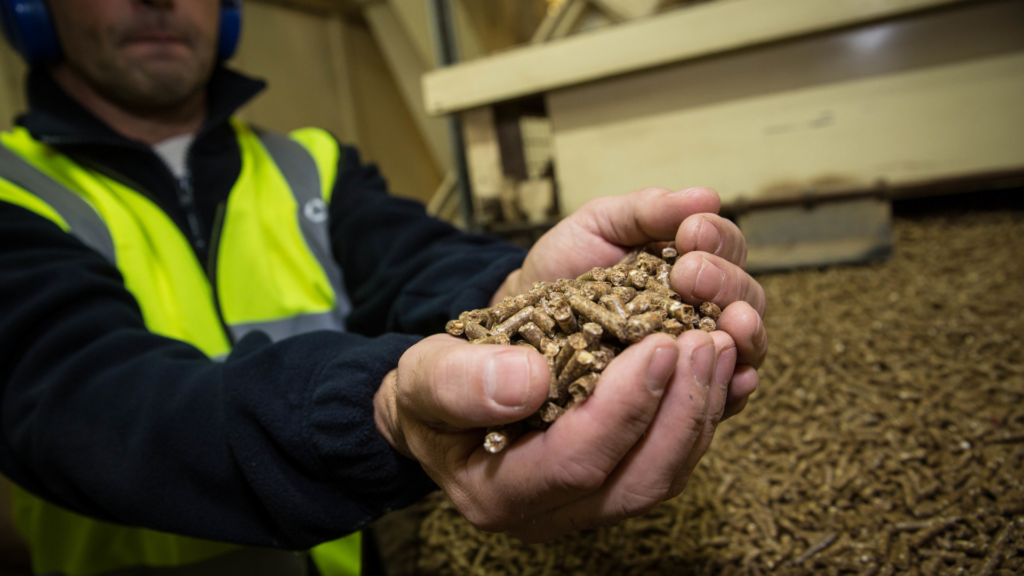
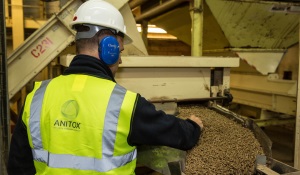
Every feed miller knows the sound of a plant running just right — that steady hum from the pellet press, steam hissing at the right pressure and the feed flowing clean through the cooler. When everything clicks, tons roll off the line, pellets stay strong and energy costs stay under control. But getting there—and staying there—takes more than experience. It takes tracking the right key performance indicators (KPIs) to measure feed production throughput and understand what’s really driving your results.Here are seven essential KPIs every miller should keep an eye on to boost efficiency, protect quality, and push more tons through the gate — safely and profitably.

1. Tons Per Hour (TPH): The Heartbeat of the Mill

Throughput starts here. TPH tells you exactly how many finished tons you’re producing per hour, shift, or day. When it slips, that’s your first sign something’s off. Maybe it’s steam pressure dropping, dies wearing down or a grind that’s a little too coarse.

Field trials across European pilot mills showed that tightening control of conditioning temperature and mash moisture lifted average throughput by 12–35%—without adding horsepower. That’s the power of paying attention to TPH not just as a number, but as a story about how well your system is tuned.
2. Energy Use per Ton: The Hidden Cost Driver

Every kilowatt-hour and pound of steam adds up. Tracking energy consumption per ton shows how much it really costs to make each batch of feed. If energy use climbs but TPH stays flat, you’re burning money somewhere — maybe a dirty die, inefficient cooler or weak steam supply.

3. Pellet Durability Index (PDI): Quality You Can Feel

Research from feed technology trials found that a 3°C drop in conditioner ΔT reduced energy use by 10% but weakened pellets, proving that efficiency is about balance, not shortcuts.

Good throughput means nothing if the pellets fall apart before they reach the feeder. PDI measures how tough those pellets really are after handling, transport and augering.In broiler trials, every 10% increase in fines led to a 3-point rise in feed conversion ratio (FCR)—costing producers up to $1.5 million per million birds. That’s why many mills aim for 90–95% PDI. Strong pellets travel better, feed better and deliver consistent nutrition.

4. Conditioning Temperature and Retention Time: Where Science Meets Art
Conditioning is where feed turns from mash to meal with real performance potential. The sweet spot? About 80–85°C for 30–40 seconds of retention, according to West Virginia University trials.Get it right, and you’ll see smoother throughput, better binding and fewer die blockages. Go too hot or too long, and you risk over-gelatinizing starch and choking the press. Consistent conditioning isn’t luck — it’s a KPI-backed habit.

5. Moisture at Load-Out: The Balancing Act

Feed that’s too wet molds fast. Too dry, and you lose weight, durability and profit. Monitoring moisture at load-out confirms that your conditioning and cooling are working in harmony.Commercial trials showed mills holding post-cooler moisture between 11.5–12.5% achieved up to 20 extra days of shelf life compared to higher-moisture feeds. That’s stability you can count on when feed travels long distances or sits in bins during humid months.

6. Overall Equipment Effectiveness (OEE): Your Mill’s True Potential

OEE ties it all together. It combines availability, performance, and quality into one score that shows how close your mill runs to its maximum capacity.A mill hitting 85% OEE is solid—but that 15% loss often hides hours of unplanned downtime, slow start-ups, or off-spec feed. Tracking OEE helps teams target what’s really limiting throughput—so you’re fixing causes, not symptoms.The best mills don’t chase tons—they manage them. Tracking key performance indicators for measuring feed production throughput gives you a clear picture of how each process step affects the next. From steam pressure to shrink rates, every data point tells a story about consistency, control, and continuous improvement.


Post Views: 988

Related posts

EuroTier 2026: World’s leading trade fair for animal husbandry professionals opens ticket shop

EuroTier 2026: World’s leading trade fair for animal husbandry professionals opens ticket shop

May 21, 2026
Camel Hidden Pillar of the Livestock Economy

Camel Hidden Pillar of the Livestock Economy

May 19, 2026
AAT and SBA announce Market Launch of Cheggy in-ovo Sexing Technology in Australia

AAT and SBA announce Market Launch of Cheggy in-ovo Sexing Technology in Australia

May 16, 2026
AGRITX CEO Launches Avian Research and Development Consortium

AGRITX CEO Launches Avian Research and Development Consortium

May 14, 2026
DAIRY SECTOR TAKES CENTER STAGE AT TUTTOFOOD 2026

DAIRY SECTOR TAKES CENTER STAGE AT TUTTOFOOD 2026

May 12, 2026
UAE’s unsold bread could help reduce reliance on imported livestock feed

UAE’s unsold bread could help reduce reliance on imported livestock feed

May 14, 2026
ShareShareTweetSendPin
Previous Post

Tradition, Innovation, and Convenience of Spanish Canned Fish and Seafood: A Category Aligned with Global Trends

Next Post

Alfa Laval Middle East Receives “Trailblazer of Dairy Processing” Award at the Global Dairy Innovation Conference 2026

Next Post
Alfa Laval Middle East Receives “Trailblazer of Dairy Processing” Award at the Global Dairy Innovation Conference 2026

Alfa Laval Middle East Receives “Trailblazer of Dairy Processing” Award at the Global Dairy Innovation Conference 2026

Jan- Mar 2026 edition

RECOMMENDED NEWS

A New Humic Acid Solution from Europe: A Revolutionary Product for the GCC Market

A New Humic Acid Solution from Europe: A Revolutionary Product for the GCC Market

2 years ago
Corbion secures Chinese regulatory approvals for algae-derived Omega-3 DHA products in human and animal nutrition

Corbion secures Chinese regulatory approvals for algae-derived Omega-3 DHA products in human and animal nutrition

11 months ago
Evonik to reduce carbon footprint and plastic use with new paper bags for MetAMINO

Evonik to reduce carbon footprint and plastic use with new paper bags for MetAMINO

10 months ago
XELERATE Business Solutions: Rethinking Poultry & Agri-Business with Smart ERP

XELERATE Business Solutions: Rethinking Poultry & Agri-Business with Smart ERP

8 months ago

FOLLOW US

BROWSE BY CATEGORIES

  • Animal Feeds & Nutrition
  • Animal Health & Hygiene
  • Aquaculture
  • Country Update
  • Dairy Products
  • Draft
  • Editor's Pick
  • Events News
  • Farming Equipment
  • Industry Update
  • Livestock Farming
  • Meat & Processing
  • Media Kit
  • News
  • Poultry Farming
  • Sponsored News
  • Video

BROWSE BY TOPICS

Adnec Al Ain alltech animal animal biosolutions Animal nutrition brenntag calves chickens cow health DAIRY dsm egg eggprocessing Equestrian event farming fee feed feed ingredients fish health HOOVES horse horse feed Hunting insect farming Ishida livestock marel meat processing middle east milk production Novonesis Novus petfood poultry poultry feeds poultry line poultry production shrimp sommet swine Thumbay veterinary clinic
Livestock & Poultry Middle East

Leading Livestock & Poultry Industry Magazine in the Gulf & Middle East Region

Follow us on social media:

Recent News

  • EuroTier 2026: World’s leading trade fair for animal husbandry professionals opens ticket shop
  • Camel Hidden Pillar of the Livestock Economy
  • AAT and SBA announce Market Launch of Cheggy in-ovo Sexing Technology in Australia
  • AGRITX CEO Launches Avian Research and Development Consortium

Category

  • Animal Feeds & Nutrition
  • Animal Health & Hygiene
  • Aquaculture
  • Country Update
  • Dairy Products
  • Draft
  • Editor's Pick
  • Events News
  • Farming Equipment
  • Industry Update
  • Livestock Farming
  • Meat & Processing
  • Media Kit
  • News
  • Poultry Farming
  • Sponsored News
  • Video

Recent News

EuroTier 2026: World’s leading trade fair for animal husbandry professionals opens ticket shop

EuroTier 2026: World’s leading trade fair for animal husbandry professionals opens ticket shop

May 21, 2026
Camel Hidden Pillar of the Livestock Economy

Camel Hidden Pillar of the Livestock Economy

May 19, 2026
  • About us
  • Advertise with us
  • Subscribe Now
  • Media Kit

© 2026 LIVESTOCK & POULTRY ME & ASIA

No Result
View All Result
  • Home
  • News
  • Videos
  • Industry Update
    • Animal Feeds & Nutrition
    • Dairy Products
    • Farming Equipment
    • Animal Health & Hygiene
    • Aquaculture
    • Livestock Farming
    • Meat & Processing
    • Poultry Farming
  • Country Update
  • Digital Magazines
    • Publications
  • Events
  • Careers
  • Contact Us

© 2026 LIVESTOCK & POULTRY ME & ASIA

Subscribe to our newsletter and online magazine

Subscription Form -pop up