
• About us
  • Advertise with us
  • Subscribe Now
  • Media Kit
Friday, April 17, 2026
Livestock & Poultry Middle East
  • Home
  • News
  • Videos
  • Industry Update
    • Animal Feeds & Nutrition
    • Dairy Products
    • Farming Equipment
    • Animal Health & Hygiene
    • Aquaculture
    • Livestock Farming
    • Meat & Processing
    • Poultry Farming
  • Country Update
  • Digital Magazines
    • Publications
  • Events
  • Careers
  • Contact Us
No Result
View All Result
  • Home
  • News
  • Videos
  • Industry Update
    • Animal Feeds & Nutrition
    • Dairy Products
    • Farming Equipment
    • Animal Health & Hygiene
    • Aquaculture
    • Livestock Farming
    • Meat & Processing
    • Poultry Farming
  • Country Update
  • Digital Magazines
    • Publications
  • Events
  • Careers
  • Contact Us
No Result
View All Result
Live Stock Middle East
No Result
View All Result
Home Editor's Pick

Can Composting Succeed in Hot, Dry Climates?

by Livestock & Poultry News Desk
2 years ago
in Editor's Pick, Industry Update
0
Can Composting Succeed in Hot, Dry Climates?
ShareShareShareShareShare

At Kohshin Engineering, we often receive inquiries about the possibility to compost in regions with minimal rainfall and high temperatures. What is our answer? Yes, not only is it possible, but it’s also the optimal method for converting manure and organic waste into a valuable resource that nurtures crops. While many farmers traditionally opt for drying manure as a means of disposal and enhancing yield, Kohshin offers a different approach. Let’s explore the difference between drying and composting.

Dried manure, due to its high salt concentration and potential for nitrogen leaching, can be detrimental to plants. As moisture evaporates during drying, salts like sodium chloride and potassium chloride become more concentrated, leading to soil salinity buildup over time. Excessive salinity can deprive plant roots of water, causing dehydration and damage, and interfere with nutrient absorption, even if the manure initially contains beneficial nutrients. Additionally, dried manure can release nitrogen too rapidly upon application, risking leaching and groundwater contamination.
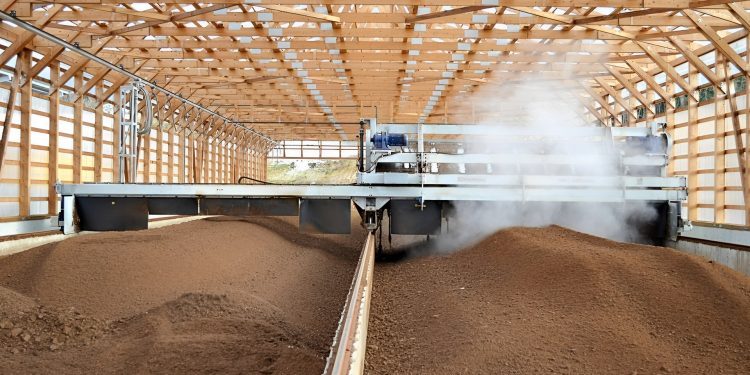
In contrast, composting is a controlled process where organic materials, including manure, decompose. Microorganisms break down the organic matter, producing stable compost rich in humus-like material. Composting stabilizes nitrogen, providing plants with nutrients gradually and minimizing environmental risks. Furthermore, composting enhances the water retention capacity of arid soils, making it particularly beneficial for regions with low precipitation levels. This not only promotes plant growth but also helps to conserve water resources.

With our composting machines, transforming manure and biowaste into premium, pathogen-free fertilizer is simple. We’ve designed our equipment to assist farmers in transitioning from low-quality, soil-damaging practices to producing high-quality fertilizer, boosting yields and income.

In summary, while dried manure may harm or damage plants and soil health, composted manure serves as a valuable soil amendment, fostering robust plant growth and soil fertility.

Post Views: 1,877

Related posts

Why strengthening aquaculture nutrition expertise is critical in 2026

Why strengthening aquaculture nutrition expertise is critical in 2026

April 13, 2026
A New Era of High‑Yield Performance- Cobb800™

A New Era of High‑Yield Performance- Cobb800™

April 1, 2026
EuroTier 2026 To Highlight Key Developments in Animal Feed, Feeding Management and Forage Production

EuroTier 2026 To Highlight Key Developments in Animal Feed, Feeding Management and Forage Production

March 12, 2026
Dual-Protection: Stronger Immunity Against ND GVII and LPAI

Dual-Protection: Stronger Immunity Against ND GVII and LPAI

March 4, 2026
Invisible stressors: When unseen challenges limit performance

Invisible stressors: When unseen challenges limit performance

March 4, 2026
Time to Rethink Weaning: Why Smarter Strategies Deliver Stronger Biological and Economic Outcomes in Dairy Calves

Time to Rethink Weaning: Why Smarter Strategies Deliver Stronger Biological and Economic Outcomes in Dairy Calves

February 11, 2026
ShareShareTweetSendPin
Previous Post

Jordan Capital & Investment Fund announces significant investment in Sinokrot Poultry farms

Next Post

Feed prices on the rise, can alternative feed materials be used for chicken diets?

Next Post
Feed prices on the rise, can alternative feed materials be used for chicken diets?

Feed prices on the rise, can alternative feed materials be used for chicken diets?

Jan- Mar 2026 edition

RECOMMENDED NEWS

How to maximize chilling efficiency

How to maximize chilling efficiency

2 years ago
Human touch leaves chicks feeling egg-stra happy, study finds

Human touch leaves chicks feeling egg-stra happy, study finds

2 weeks ago
FFAR Research Improves Cattle Reproduction

FFAR Research Improves Cattle Reproduction

8 months ago
Brenntag Specialties Animal Nutrition attends ‘Zootechnia’ to present solutions and tools to the Animal Nutrition industry

Brenntag Specialties Animal Nutrition attends ‘Zootechnia’ to present solutions and tools to the Animal Nutrition industry

1 year ago

FOLLOW US

BROWSE BY CATEGORIES

  • Animal Feeds & Nutrition
  • Animal Health & Hygiene
  • Aquaculture
  • Country Update
  • Dairy Products
  • Draft
  • Editor's Pick
  • Events News
  • Farming Equipment
  • Industry Update
  • Livestock Farming
  • Meat & Processing
  • Media Kit
  • News
  • Poultry Farming
  • Sponsored News
  • Video

BROWSE BY TOPICS

Adnec Al Ain alltech animal animal biosolutions Animal nutrition brenntag calves chickens cow health DAIRY dsm egg eggprocessing Equestrian event farming fee feed feed ingredients fish health HOOVES horse horse feed Hunting insect farming Ishida livestock marel meat processing middle east milk production Novonesis Novus petfood poultry poultry feeds poultry line poultry production shrimp sommet swine Thumbay veterinary clinic
Livestock & Poultry Middle East

Leading Livestock & Poultry Industry Magazine in the Gulf & Middle East Region

Follow us on social media:

Recent News

  • VIV Select India 2026 Show Preview: Marking a New Chapter for the Country’s Livestock and Poultry Sector
  • World Without Cows places Ireland’s dairy producers at the center of the global food conversation with The Pasture Paradox
  • Why strengthening aquaculture nutrition expertise is critical in 2026
  • Antonin Bonneau Appointed as President of Aviagen Asia to Drive Strategic Growth

Category

  • Animal Feeds & Nutrition
  • Animal Health & Hygiene
  • Aquaculture
  • Country Update
  • Dairy Products
  • Draft
  • Editor's Pick
  • Events News
  • Farming Equipment
  • Industry Update
  • Livestock Farming
  • Meat & Processing
  • Media Kit
  • News
  • Poultry Farming
  • Sponsored News
  • Video

Recent News

VIV Select India 2026 Show Preview: Marking a New Chapter for the Country’s Livestock and Poultry Sector

VIV Select India 2026 Show Preview: Marking a New Chapter for the Country’s Livestock and Poultry Sector

April 17, 2026
World Without Cows places Ireland’s dairy producers at the center of the global food conversation with The Pasture Paradox

World Without Cows places Ireland’s dairy producers at the center of the global food conversation with The Pasture Paradox

April 15, 2026
  • About us
  • Advertise with us
  • Subscribe Now
  • Media Kit

© 2026 LIVESTOCK & POULTRY ME & ASIA

No Result
View All Result
  • Home
  • News
  • Videos
  • Industry Update
    • Animal Feeds & Nutrition
    • Dairy Products
    • Farming Equipment
    • Animal Health & Hygiene
    • Aquaculture
    • Livestock Farming
    • Meat & Processing
    • Poultry Farming
  • Country Update
  • Digital Magazines
    • Publications
  • Events
  • Careers
  • Contact Us

© 2026 LIVESTOCK & POULTRY ME & ASIA

Subscribe to our newsletter and online magazine

Subscription Form -pop up