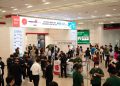


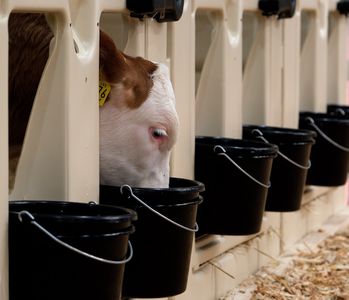
EuroTier 2026, taking place from November 10 to 13, 2026 in Hanover, Germany, will once again serve as a key meeting place for developments in livestock feed, feeding management and forage production. emission reduction, the use of alternative protein sources in animal nutrition, and effective forage production and preservation are just a few of the topics that farmers can explore in-depth in the exhibition’s technical program.
Under the guiding theme “Intelligence in animal farming”, the event will feature an extensive technical program, including the DLG Spotlight on forage production and the DLG Spotlight on emission reduction, as well as the new Forage Days on November 12 and 13. Further information is available at eurotier.com. Die Gestaltung der Fütterung ist für Nutztierhalter von zentraler Bedeutung, da sie entscheidenden Einfluss auf die Tierleistung, Wirtschaftlichkeit sowie Umwelt- und Klimawirkungen hat. Ziel ist eine möglichst präzise, effiziente und bedarfsgerechte Versorgung der Tiere mit Energie und Nährstoffen.Feeding strategies are central to livestock production, significantly influencing animal performance, economic outcomes and environmental and climate impacts. The aim is to supply animals with energy and nutrients as precisely and efficiently as possible, optimizing overall feed efficiency in the herd.
Emissions: Opportunities in feeding and forage production
Feeding practices largely determine how effectively animals are supplied with energy and nutrients. Nitrogen and phosphorus excretion and the extent of ammonia, nitrous oxide and methane emissions are a few of the variables that can be controlled. Key levers for reducing emissions include efficient forage production, minimizing losses along the entire feed chain, and formulating rations precisely according to animal requirements. High‑quality forage, professional silage and storage management, and regular feed analyses support resource‑efficient production, cost reduction and a lower overall emission intensity at farm level.Environmental impacts also require attention to methane formation in the rumen. Methane output is influenced by both feed intake and the fiber and fat concentration of the ration, while the physiological needs of ruminants must be respected. Studies show that high forage quality is essential because it reduces reliance on concentrate feed and improves overall feed efficiency, supporting both animal performance and economic viability.
Because methane production is required for many physiological and biochemical processes in the rumen, it cannot be fully eliminated. The focus is therefore on maximizing efficiency. Stable animal health, higher lifetime productivity and longer productive lifespans significantly improve feed efficiency, expressed as the feed conversion ratio (FCR), and reduce the emission intensity of milk and meat production. Genetic progress, optimized herd and farm management, needs‑based fertilization and modern manure storage and application technologies make additional contributions to lowering emissions.
DLG Spotlight: Emission Reduction
In pig production, feeding strategies with reduced nitrogen and phosphorus content are a central tool for lowering ammonia emissions. As a general rule, reducing crude protein concentration by one percentage point lowers ammonia emissions by around ten percent. The focus lies on precise amino acid supply and ration formulation based on digestible amino acids. When adapted to farm conditions, this approach supports performance while ensuring environmentally responsible nutrient use.In poultry farming, nitrogen-reduced and phosphorus‑reduced feeding is likewise an effective instrument. By precisely adjusting nutrient concentrations to animal needs, nutrient surpluses can be significantly reduced, lowering nitrogen and phosphorus inputs to soil, water and air.
The DLG Spotlight “Emission Reduction” at EuroTier 2026 will present what role feeding plays in reducing emissions and highlight technical solutions for pig and poultry systems. Visitors will have the opportunity to discuss practical solutions with experts and exhibitors, combining environmental and climate protection with animal welfare and economic performance.
Forage quality as a key success factor
Forage quality is a decisive factor for high‑performing ruminant herds and profitable milk production. Considerable losses still occur along the forage chain, from field to feeding. Consistent application of best practices can significantly reduce these losses.High and stable forage quality requires targeted use of modern machinery at every stage: harvesting, conservation, storage and feeding. Well‑coordinated equipment helps save labor time, reduce weather‑related risks and minimize losses in quantity and quality. Fast, low‑loss processes, such as completing ensiling within 24 hours or ensuring rapid drying during haymaking, are essential, along with correctly adjusted equipment to prevent contamination and resulting fermentation issues.
Modern technology supports forage hygiene, fermentation quality and storage stability, for example through low‑emission manure application, adapted chop lengths, verified silage additives, high compaction and airtight covering systems. Proper silage removal is also crucial: clean cuts, adequate advancement and daily fresh feeding prevent reheating and spoilage. Only hygienically sound, stable and well‑digestible forage ensures high intake and healthy, productive animals.Accurate knowledge of silage quality is essential for precise ration formulation. In maize and grass silages, dry‑matter and nutrient contents can vary significantly within a single silo, directly affecting ration accuracy. Modern dry‑matter sensors used during feed-out enable continuous real‑time measurement and automatic adjustment of the ration. While initial analyses provide a planning basis, regular follow‑up sampling is needed for fine‑tuning forage inventories and maintaining optimal feed efficiency.
For more information:- https://www.eurotier.com/en/
Related posts