

• About us
  • Advertise with us
  • Subscribe Now
  • Media Kit
Thursday, April 2, 2026
19 °c
Columbus
19 ° Wed
20 ° Thu
22 ° Fri
19 ° Sat
Livestock & Poultry Middle East
  • Home
  • News
  • Videos
  • Industry Update
    • Animal Feeds & Nutrition
    • Dairy Products
    • Farming Equipment
    • Animal Health & Hygiene
    • Aquaculture
    • Livestock Farming
    • Meat & Processing
    • Poultry Farming
  • Country Update
  • Digital Magazines
    • Publications
  • Events
  • Careers
  • Contact Us
No Result
View All Result
  • Home
  • News
  • Videos
  • Industry Update
    • Animal Feeds & Nutrition
    • Dairy Products
    • Farming Equipment
    • Animal Health & Hygiene
    • Aquaculture
    • Livestock Farming
    • Meat & Processing
    • Poultry Farming
  • Country Update
  • Digital Magazines
    • Publications
  • Events
  • Careers
  • Contact Us
No Result
View All Result
Live Stock Middle East
No Result
View All Result
Home Industry Update Animal Feeds & Nutrition

Dry and Transition Cow Management

by Livestock & Poultry News Desk
2 years ago
in Animal Feeds & Nutrition, Animal Health & Hygiene, Industry Update
0
Dry and Transition Cow Management
ShareShareShareShareShare
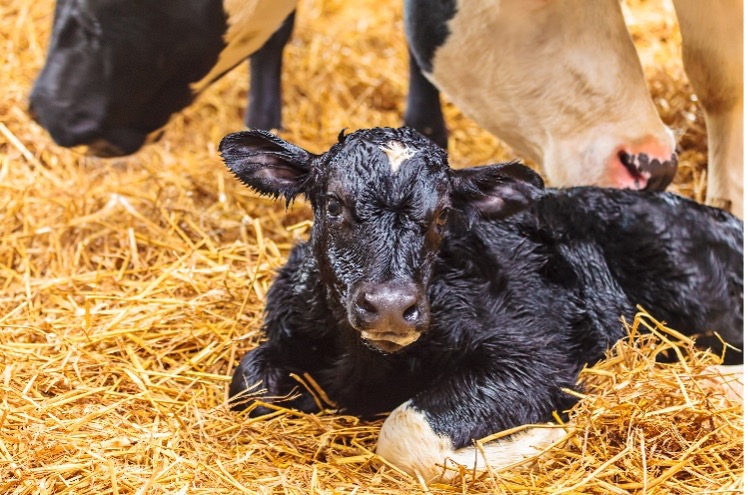
The dry period is a rest time for the cow during the lactation cycle and is of paramount importance for the health and well-being of the animal. The impact of key management decisions taken during this time will be felt throughout the next lactation of the cow.

The following key components are essential for a successful dry cow management regime:

Dry Cow Period

The ideal dry cow period is 8 weeks. However, a longer dry period of 10 to 14 weeks is required for animals in sub-optimal body condition, carrying twins and first lactation or older animals. In an ideal situation, Body Condition Score (BCS) would be assessed 6 to 8 weeks prior to drying off with diets adjusted accordingly i.e., increase feeding to under-conditioned animals.

Dry cows should have a minimum of 0.66m feed space per cow available to support optimal Dry Matter Intake (DMI). Fresh feed should be supplied daily with optimal chop length if feeding via Total Mixed Ration (TMR). Clean water should be easily accessed at all stages. Adequate clean and comfortable resting areas should be made available for dry cows.

Body Condition Score (BCS)

Ideally cows should be dried off with a BCS between 2.75 and 3. Target BCS at calving is 3 to 3.5 for first calving heifers and 3 to 3.25 for cows. Cows calving with excess condition i.e., BCS >3.5 have depressed appetites and lose more body weight in early lactation. This leads to increased incidences of metabolic disorders which will have a negative impact on animal health and milk production. Dry cows should be grouped according to their BCS and their feeding programmes adjusted accordingly (to correct the BCS of animals outside of optimal range).

Cow Health

Any hoof health and lameness issues should be treated before the drying off process begins and heavily pregnant cows should be handled with due care at all stages. Foot bathing should be a regular occurrence for both dry cows and in-calf heifers. Farmers should consult with their vet on recommendations regarding liver fluke, rumen fluke, worm and selective dry cow treatments.

Dietary Requirements

As calving approaches, it is vitally important that cows receive the correct balance of energy and protein to meet their increasing nutritional demands. High quality protein is recommended in the close-up period before calving to ensure the production of sufficient quantity and quality colostrum.

Forage to be fed during the dry period should be analysed and chosen based on suitability for pre-calving cows. High Dietary Cation Anion Balance (DCAB) forages with excess Potassium (K) are associated with clinical and subclinical hypocalcaemia at calving time. This can have wide ranging impacts on the cow such as increased incidence of metabolic issues, including: retained afterbirths, metritis, mastitis and displaced abomasums, all of which reduce performance during lactation.

For more information on how to reduce the risk of hypocalcaemia with SoyChlor, click here: https://www.youtube.com/watch?v=iK6tBG-lFZY&t=186s

Mineral Supplementation

Cows should be fed dry cow mineral premixes for 8 weeks prior to calving. In-calf heifers should be fed for an extended period of 12 weeks before calving.

Dry cow minerals can be fed via TMR or scattered on top of silage. If spreading minerals on top of silage it is necessary to divide the minerals over at least two feedings per day. It is important to note that all dry cows and in-calf heifers reduce their dry matter intake by 30-40% for the last 4 to 7 days before calving. Hence, on many farms the dry cow minerals are included as part of the concentrate fed, whereby half of the daily concentrate and mineral is fed in the morning and the remainder is fed 12 hours later in the day. Remember, the cow cannot store Mg for longer than 10-12 hours. Splitting over two feeds helps to ensure that the cow receives adequate Mg right up to the time of calving.

Devenish Nutrition offers a range of nutritional solutions to match the type of cow, production level and type of system. Some of these include the use of Dry Cow Salts, Mag12 and SoyChlor. 

For more information, visit www.devenishnutrition.com

Post Views: 2,254

Related posts

Dual-Protection: Stronger Immunity Against ND GVII and LPAI

Dual-Protection: Stronger Immunity Against ND GVII and LPAI

March 4, 2026
Invisible stressors: When unseen challenges limit performance

Invisible stressors: When unseen challenges limit performance

March 4, 2026
Tradition, Innovation, and Convenience of Spanish Canned Fish and Seafood: A Category Aligned with Global Trends

Tradition, Innovation, and Convenience of Spanish Canned Fish and Seafood: A Category Aligned with Global Trends

January 27, 2026
JAPANESE WAGYU FROM JAPAN : Gulfood Trade Centre Arena S-H2

JAPANESE WAGYU FROM JAPAN : Gulfood Trade Centre Arena S-H2

January 24, 2026
Quality, Food Safety, and Variety: Spain’s Reliable Value Proposition for the International Market

Quality, Food Safety, and Variety: Spain’s Reliable Value Proposition for the International Market

January 19, 2026
The Impact of Nest Materials on Breeder Layer Productivity

The Impact of Nest Materials on Breeder Layer Productivity

November 26, 2025
Tags: animalcalvescow healthhealthmilk production
ShareShareTweetSendPin
Previous Post

To modernise the legislative system and ensure the quality of food and animal feed ADAFSA Regulates Food and Fodder Sampling

Next Post

Cargill Invests $1 Million in Research on Methane Reduction in Cattle

Next Post
Cargill Invests $1 Million in Research on Methane Reduction in Cattle

Cargill Invests $1 Million in Research on Methane Reduction in Cattle

Jan- Mar 2026 edition

RECOMMENDED NEWS

SUCCESSFUL CONCLUSION TO VIV AND HAN MEA 2023: SHOWCASING THE FUTURE OF THE SEED TO FOOD INDUSTRY IN ABU DHABI

SUCCESSFUL CONCLUSION TO VIV AND HAN MEA 2023: SHOWCASING THE FUTURE OF THE SEED TO FOOD INDUSTRY IN ABU DHABI

2 years ago
STRONG RECOVERY ON RADAR FOR LIVESTOCK’ IN PARAGUAY AS BEEF EXPORTS INCREASE IN 2024

STRONG RECOVERY ON RADAR FOR LIVESTOCK’ IN PARAGUAY AS BEEF EXPORTS INCREASE IN 2024

2 years ago
SPACE launches its new design for its 39th edition!

SPACE launches its new design for its 39th edition!

1 year ago
Corbion secures Chinese regulatory approvals for algae-derived Omega-3 DHA products in human and animal nutrition

Corbion secures Chinese regulatory approvals for algae-derived Omega-3 DHA products in human and animal nutrition

9 months ago

FOLLOW US

BROWSE BY CATEGORIES

  • Animal Feeds & Nutrition
  • Animal Health & Hygiene
  • Aquaculture
  • Country Update
  • Dairy Products
  • Draft
  • Editor's Pick
  • Events News
  • Farming Equipment
  • Industry Update
  • Livestock Farming
  • Meat & Processing
  • Media Kit
  • News
  • Poultry Farming
  • Sponsored News
  • Video

BROWSE BY TOPICS

Adnec Al Ain alltech animal animal biosolutions Animal nutrition brenntag calves chickens cow health DAIRY dsm egg eggprocessing Equestrian event farming fee feed feed ingredients fish health HOOVES horse horse feed Hunting insect farming Ishida livestock marel meat processing middle east milk production Novonesis Novus petfood poultry poultry feeds poultry line poultry production shrimp sommet swine Thumbay veterinary clinic
Livestock & Poultry Middle East

Leading Livestock & Poultry Industry Magazine in the Gulf & Middle East Region

Follow us on social media:

Recent News

  • A New Era of High‑Yield Performance- Cobb800™
  • Smart Feeding Strategies for Dairy Calves Using Milk Replacers- A Practical Guide for Progressive Dairy Farmers
  • How low-dose feed technologies enhance complex diets for higher efficiency and return on investment
  • Building on a Decade of Research, NOVUS Welcomes Julien Kanarek to Guide Enzyme Growth

Category

  • Animal Feeds & Nutrition
  • Animal Health & Hygiene
  • Aquaculture
  • Country Update
  • Dairy Products
  • Draft
  • Editor's Pick
  • Events News
  • Farming Equipment
  • Industry Update
  • Livestock Farming
  • Meat & Processing
  • Media Kit
  • News
  • Poultry Farming
  • Sponsored News
  • Video

Recent News

A New Era of High‑Yield Performance- Cobb800™

A New Era of High‑Yield Performance- Cobb800™

April 1, 2026
Smart Feeding Strategies for Dairy Calves Using Milk Replacers- A Practical Guide for Progressive Dairy Farmers

Smart Feeding Strategies for Dairy Calves Using Milk Replacers- A Practical Guide for Progressive Dairy Farmers

March 30, 2026
  • About us
  • Advertise with us
  • Subscribe Now
  • Media Kit

© 2026 LIVESTOCK & POULTRY ME & ASIA

No Result
View All Result
  • Home
  • News
  • Videos
  • Industry Update
    • Animal Feeds & Nutrition
    • Dairy Products
    • Farming Equipment
    • Animal Health & Hygiene
    • Aquaculture
    • Livestock Farming
    • Meat & Processing
    • Poultry Farming
  • Country Update
  • Digital Magazines
    • Publications
  • Events
  • Careers
  • Contact Us

© 2026 LIVESTOCK & POULTRY ME & ASIA

Subscribe to our newsletter and online magazine

Subscription Form -pop up