
• About us
  • Advertise with us
  • Subscribe Now
  • Media Kit
Saturday, January 31, 2026
Livestock & Poultry Middle East
Text in HTML
MIDDLE EAST'S HIGHEST
CIRCULATING LIVESTOCK &
POULTRY MAGAZINE WITH PRINT & ONLINE READERSHIPS
  • Home
  • News
  • Videos
  • Industry Update
    • Animal Feeds & Nutrition
    • Dairy Products
    • Farming Equipment
    • Animal Health & Hygiene
    • Aquaculture
    • Livestock Farming
    • Meat & Processing
    • Poultry Farming
  • Country Update
  • Digital Magazines
    • Publications
  • Events
  • Careers
  • Contact Us
No Result
View All Result
  • Home
  • News
  • Videos
  • Industry Update
    • Animal Feeds & Nutrition
    • Dairy Products
    • Farming Equipment
    • Animal Health & Hygiene
    • Aquaculture
    • Livestock Farming
    • Meat & Processing
    • Poultry Farming
  • Country Update
  • Digital Magazines
    • Publications
  • Events
  • Careers
  • Contact Us
No Result
View All Result
Live Stock Middle East
No Result
View All Result
Home Industry Update Aquaculture

TechnoSpore® in Aquafeed—A Holistic Approach to Improving Fish Production.

by Livestock & Poultry News Desk
2 years ago
in Aquaculture, Industry Update
0
TechnoSpore® in Aquafeed—A Holistic Approach to Improving Fish Production.
ShareShareShareShareShare

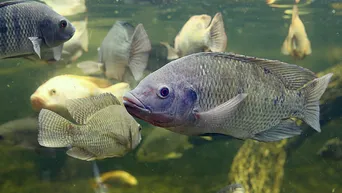
The intricate ecosystem of gut microbiota is a central element in the mechanism of health, disease, and productivity. While the scientific community has made significant progress in the knowledge of the microbiota of many animals, our understanding of fish microbiota is not as robust. Nevertheless, research has shed light on the critical role that the gut microbiota plays in the well-being, performance, and biological functions of fish.

Factors that affect the gut microbiota.

The unique microbial composition within an individual fish is shaped by a combination of selective pressures exerted by the host, diet, and environmental conditions. The relative contributions of the different factors influencing the microbiota are still unclear. Studies of fish diets and gut microbiota have shown the gut microbiota is associated with different dietary patterns, feed, and nutrients.

It has been noted that replacing fishmeal with plant-based protein results in a significant reduction in the diversity of the gut microbiota. The type of protein fed can also affect the microbiota. For instance, replacing plant proteins with poultry by-product meal results in increased protein degrading microbes in rainbow trout.

The effects of dietary lipids on the intestinal microbiota of fish have also been investigated. Vegetable oils with different fatty acid compositions had a significant effect on the abundance and diversity of gut microbes and fish fed with saturated fatty acids had greater gut microbial diversity. Furthermore, the abundance of Pseudomonas spp. was found to be elevated in fish fed a high saturated fatty acids diet, and fish oil supplementation limited the growth of Pseudomonas spp.

The environmental factors influencing wild fish microbial communities are mainly related to water quality and chemistry. Studies with Atlantic salmon transitioning from freshwater to seawater have shown that the change in salinity causes a dramatic change in the microbiota. This could also be a reason for the reduced feed intake and overall performance during this transition phase.

The influence of water temperature on the fish intestinal microbiota is an important question as well, as fish can face increased or decreased water temperature due to seasonal changes. It has been noted that cold stress reduced the diversity, and composition of the intestinal microbiota of blue tilapia. When the microbial response of cold-resistant and cold-sensitive fish were compared, the microbiota of cold-resistant fish was more resilient to temperature changes. As such, water temperature acts as an influencing environmental factor.

Effects of the Intestinal Microbiota on the Host.

In a fascinating display of biological interplay, commensal bacteria regulate many key aspects of the host in a mutualistic relationship. The gut microbiota is considered an important factor in the regulation of nutrition and metabolism in fish and can regulate many key aspects of host functions involving feeding behavior, energy balance, nutrient metabolism, and immune response.

For example, gut microbes promote energy absorption by the host and regulate the expression of genes involved in energy and lipid metabolism. It is also proposed that the microbiota of herbivorous fish can convert dietary carbohydrates into short chain fatty acids, which play an important role in host nutrition and health.

Gut microbes are essential for maintaining the development and maturation of the immune system. Gut colonization in zebrafish was found to induce the expression of genes related to innate immune responses and to activate transcription factors like NF-κB in tissues, supporting the role of the microbiota in immune regulation. Early colonization of the gut microbiota by certain bacterial species was required for normal neurobehavioral development in zebrafish.

In tilapia, the use of probiotics was found to activate gut microbial changes consistent with activation of the endocrine system, including increased expression of insulin-like growth factor genes. The insulin-like growth factor system is involved in the regulation of cell growth and differentiation, proliferation and survival, and is responsible for healthy growth in juveniles.

TechnoSpore®.

Microbial probiotics can be sorted into two main categories—spore-forming and lactic acid producing bacteria. Each has its benefits. Spore-forming microbes are easier to handle and process when they are in their spore-stage. Furthermore, some produce digestive enzymes to improve feed conversion and are especially known to inhibit gram-positive pathogenic bacteria.

Lactic acid bacteria are quick to become active in the gut compared to other probiotics. These bacteria are prolific producers of lactic acid, which improves the overall gut environment, and are known to reduce gram-negative pathogenic bacteria.

There is one species of bacteria that combines the best of both—Bacillus coagulans. This is currently the only known probiotic that is both spore-forming and produces large amounts of lactic acid. This means that this probiotic is easy to handle, but also provides gram-positive and gram-negative bacterial inhibition, digestive enzyme production, and overall improvement of the intestinal environment. Bacillus coaglans is known to have positive effects on the gut morphology across numerous species, of not only swine and poultry, but also of fish and shrimp.

For More information:-TechnoSpore® in Aquafeed—A Holistic Approach to Improving Fish Production. – Biochem

Post Views: 1,867

Related posts

Tradition, Innovation, and Convenience of Spanish Canned Fish and Seafood: A Category Aligned with Global Trends

Tradition, Innovation, and Convenience of Spanish Canned Fish and Seafood: A Category Aligned with Global Trends

January 27, 2026
JAPANESE WAGYU FROM JAPAN : Gulfood Trade Centre Arena S-H2

JAPANESE WAGYU FROM JAPAN : Gulfood Trade Centre Arena S-H2

January 24, 2026
Quality, Food Safety, and Variety: Spain’s Reliable Value Proposition for the International Market

Quality, Food Safety, and Variety: Spain’s Reliable Value Proposition for the International Market

January 19, 2026
The Impact of Nest Materials on Breeder Layer Productivity

The Impact of Nest Materials on Breeder Layer Productivity

November 26, 2025
Is Bigger Always Better? A New Approach to Poultry Processing

Is Bigger Always Better? A New Approach to Poultry Processing

November 25, 2025
Postbiotics: The Smart Way to Beat the Heat in Livestock

Postbiotics: The Smart Way to Beat the Heat in Livestock

November 22, 2025
ShareShareTweetSendPin
Previous Post

EuroTier 2024: Trade fair’s topics attract great visitor interest

Next Post

EuroTier 2024: Showcase for innovative animal feed solutions

Next Post
EuroTier 2024: Showcase for innovative animal feed solutions

EuroTier 2024: Showcase for innovative animal feed solutions

Oct- Dec 2025 edition

RECOMMENDED NEWS

Ceva Animal Health unveils new global headquarters: A strategic step forward for future growth

Ceva Animal Health unveils new global headquarters: A strategic step forward for future growth

5 months ago
Axel Aguayo joins Hubbard as Technical Sales Manager Spain & Portugal

Axel Aguayo joins Hubbard as Technical Sales Manager Spain & Portugal

1 month ago
Almarai expands into food sectors beyond dairy

Almarai expands into food sectors beyond dairy

1 year ago
Brenntag Specialties Animal Nutrition and BTSA will present organic antioxidant innovations at the Nordic Pet Food Conference

Brenntag Specialties Animal Nutrition and BTSA will present organic antioxidant innovations at the Nordic Pet Food Conference

5 months ago

FOLLOW US

BROWSE BY CATEGORIES

  • Animal Feeds & Nutrition
  • Animal Health & Hygiene
  • Aquaculture
  • Country Update
  • Dairy Products
  • Draft
  • Editor's Pick
  • Events News
  • Farming Equipment
  • Industry Update
  • Livestock Farming
  • Meat & Processing
  • Media Kit
  • News
  • Poultry Farming
  • Sponsored News
  • Video

BROWSE BY TOPICS

Adnec Al Ain alltech animal animal biosolutions Animal nutrition brenntag calves chickens cow health DAIRY dsm egg eggprocessing Equestrian event farming fee feed feed ingredients fish health HOOVES horse horse feed Hunting insect farming Ishida livestock marel meat processing middle east milk production Novonesis Novus petfood poultry poultry feeds poultry line poultry production shrimp sommet swine Thumbay veterinary clinic
Livestock & Poultry Middle East

Leading Livestock & Poultry Industry Magazine in the Gulf & Middle East Region

Follow us on social media:

Recent News

  • 6 Key Performance Indicators for Measuring Feed Production Throughput
  • Tradition, Innovation, and Convenience of Spanish Canned Fish and Seafood: A Category Aligned with Global Trends
  • Dubai Makes History as Gulfood Takes Over Two Mega Venues and Unveils the Expanded Dubai Exhibition Centre at Expo City
  • JAPANESE WAGYU FROM JAPAN : Gulfood Trade Centre Arena S-H2

Category

  • Animal Feeds & Nutrition
  • Animal Health & Hygiene
  • Aquaculture
  • Country Update
  • Dairy Products
  • Draft
  • Editor's Pick
  • Events News
  • Farming Equipment
  • Industry Update
  • Livestock Farming
  • Meat & Processing
  • Media Kit
  • News
  • Poultry Farming
  • Sponsored News
  • Video

Recent News

6 Key Performance Indicators for Measuring Feed Production Throughput

6 Key Performance Indicators for Measuring Feed Production Throughput

January 30, 2026
Tradition, Innovation, and Convenience of Spanish Canned Fish and Seafood: A Category Aligned with Global Trends

Tradition, Innovation, and Convenience of Spanish Canned Fish and Seafood: A Category Aligned with Global Trends

January 27, 2026
  • About us
  • Advertise with us
  • Subscribe Now
  • Media Kit

© 2026 LIVESTOCK & POULTRY ME & ASIA

No Result
View All Result
  • Home
  • News
  • Videos
  • Industry Update
    • Animal Feeds & Nutrition
    • Dairy Products
    • Farming Equipment
    • Animal Health & Hygiene
    • Aquaculture
    • Livestock Farming
    • Meat & Processing
    • Poultry Farming
  • Country Update
  • Digital Magazines
    • Publications
  • Events
  • Careers
  • Contact Us

© 2026 LIVESTOCK & POULTRY ME & ASIA

Subscribe to our newsletter and online magazine

Subscription Form -pop up