

• About us
  • Advertise with us
  • Subscribe Now
  • Media Kit
Saturday, January 31, 2026
Livestock & Poultry Middle East
Text in HTML
MIDDLE EAST'S HIGHEST
CIRCULATING LIVESTOCK &
POULTRY MAGAZINE WITH PRINT & ONLINE READERSHIPS
  • Home
  • News
  • Videos
  • Industry Update
    • Animal Feeds & Nutrition
    • Dairy Products
    • Farming Equipment
    • Animal Health & Hygiene
    • Aquaculture
    • Livestock Farming
    • Meat & Processing
    • Poultry Farming
  • Country Update
  • Digital Magazines
    • Publications
  • Events
  • Careers
  • Contact Us
No Result
View All Result
  • Home
  • News
  • Videos
  • Industry Update
    • Animal Feeds & Nutrition
    • Dairy Products
    • Farming Equipment
    • Animal Health & Hygiene
    • Aquaculture
    • Livestock Farming
    • Meat & Processing
    • Poultry Farming
  • Country Update
  • Digital Magazines
    • Publications
  • Events
  • Careers
  • Contact Us
No Result
View All Result
Live Stock Middle East
No Result
View All Result
Home Industry Update

Successful transition cow management with data

by Livestock & Poultry News Desk
1 year ago
in Industry Update, Livestock Farming
0
Successful transition cow management with data
ShareShareShareShareShare

The importance of transition cow management is well-known. But until recently, there have been unknowns about early disease indicators which impact the health of transition cows and heifers.

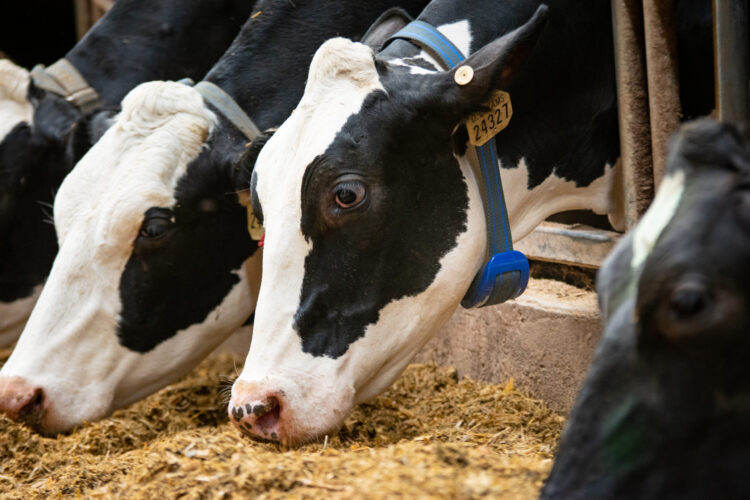
Activity monitoring systems like Alta COW WATCH have changed the game. The ability to track individual cow activity during the dry period and early lactation has given us a wealth of insights and data – data which has recently been used to identify potential red flags during the transition period for early intervention. Let’s explore some instances where activity monitoring data can be used as an indicator for transition cow success.

Eating time data and time to first service

Launched in the Netherlands in 2016, the “Sense of Sensors in Transition Management Study” uses activity-monitor sensor data and regular veterinary check-ups to develop early indicators and benchmarks for a successful transition cow period. The study recently uncovered a relationship between eating time during transition and earlier first service, which could have an impact on your dry cow feeding strategy. Dry cows with longer eating time four weeks before calving were ready to be bred back sooner than cows who ate for less time. Cows with longer eating times three to four weeks after calving were also ready to be bred back sooner. Activity monitoring systems enable farmers to monitor individual cow and overall herd eating time. These systems send alerts when a cow’s eating time drops or when it’s lower than the herd average. The alert empowers the farmer to intervene, adjust the feed plan, call a veterinarian or pencil out a new dry cow feeding program. Early intervention can result in improved eating time and cows that breed back sooner.

Eating activity and milk production in transition cows

Eating data from activity monitoring systems can also indicate a healthy lactation. Low eating time in transition cows during the dry period can be an early indicator for lost body condition, low milk production, diseases and/or longer time to first insemination during lactation. Feed plan adjustments can be made based on eating time data and desired milk production. On one farm in the study, fresh heifer milk production was underperforming compared to older cows. Activity monitoring data showed cows spent 24% of the day eating, which is normal. Upon ruling out eating time as an issue, the farmer dug deeper and observed that older, more aggressive cows at the feedbunk were sorting the roughage. As a result, fresh heifers weren’t getting the right nutrients. Activity monitoring data showed immediate desirable changes after the farmer changed his feeding strategy to eliminate sorting. The changes included increased rumination time, increased lying time and less competition at the feedbunk. Younger cows received a better balance of nutrients to help maximize milk production. Average milk production for first-lactation cows increased by 4%. In this real-life example, activity monitoring data told the farmer fresh heifer eating time was normal. Normal eating time pointed to a potential feed nutrient issue, which he identified visually and was confirmed with sensor data. The data also enabled the farmer to monitor the immediate impact of the management change. This demonstrates how sensor data generates value when paired with farmer knowhow on feeding strategy, feed management and pen characteristics.

Chewing activity and ketosis, hypocalcemia incidence

Activity monitoring data on chewing activity (eating and rumination) can be used to detect early signs of ketosis and hypocalcemia in transition cows. Cows that chew less throughout the entire dry period are at higher risk of developing these metabolic diseases. Based on benchmarks established in the study, activity monitoring in transition cows can detect subtle changes in eating and rumination activity which are consistent with ketosis or hypocalcemia, before visual symptoms appear. In one real-life example, the cow chewing activity dropped significantly the day before calving and remained depressed until she received treatment for ketosis, which wasn’t visibly diagnosed until day six. Activity monitoring systems will show you when depressed chewing data lasts longer than a day or two. Farmers can then determine if there is a pen-wide management issue or an individual case of ketosis. Early detection and treatment of ketosis and other metabolic diseases before clinical signs can result in significant cost savings. Ketosis’ impact extends beyond early lactation, so it’s important to catch at-risk cows early and intervene for lactation-long productivity.

Post Views: 1,687

Related posts

Tradition, Innovation, and Convenience of Spanish Canned Fish and Seafood: A Category Aligned with Global Trends

Tradition, Innovation, and Convenience of Spanish Canned Fish and Seafood: A Category Aligned with Global Trends

January 27, 2026
JAPANESE WAGYU FROM JAPAN : Gulfood Trade Centre Arena S-H2

JAPANESE WAGYU FROM JAPAN : Gulfood Trade Centre Arena S-H2

January 24, 2026
Quality, Food Safety, and Variety: Spain’s Reliable Value Proposition for the International Market

Quality, Food Safety, and Variety: Spain’s Reliable Value Proposition for the International Market

January 19, 2026
The Impact of Nest Materials on Breeder Layer Productivity

The Impact of Nest Materials on Breeder Layer Productivity

November 26, 2025
Is Bigger Always Better? A New Approach to Poultry Processing

Is Bigger Always Better? A New Approach to Poultry Processing

November 25, 2025
Postbiotics: The Smart Way to Beat the Heat in Livestock

Postbiotics: The Smart Way to Beat the Heat in Livestock

November 22, 2025
ShareShareTweetSendPin
Previous Post

SPACE 2024: Western France Is A Powerhouse Region For Animal Farming

Next Post

AgraME to Host Middle East’s Largest Agriculture Event Focused on Food Security, Resilience, and Regenerative Practices

Next Post
AgraME to Host Middle East’s Largest Agriculture Event Focused on Food Security, Resilience, and Regenerative Practices

AgraME to Host Middle East's Largest Agriculture Event Focused on Food Security, Resilience, and Regenerative Practices

Oct- Dec 2025 edition

RECOMMENDED NEWS

The symbolic glass ceiling of 120,000 visitors broken

The symbolic glass ceiling of 120,000 visitors broken

1 year ago
Healthier animals, lower costs: a win for your business

Healthier animals, lower costs: a win for your business

1 year ago
Brenntag Specialties Animal Nutrition attends ‘Zootechnia’ to present solutions and tools to the Animal Nutrition industry

Brenntag Specialties Animal Nutrition attends ‘Zootechnia’ to present solutions and tools to the Animal Nutrition industry

1 year ago
The rapid evolution of avian influenza calls for innovation: why our preventive medicine initiatives are key to reducing zoonotic risks

The rapid evolution of avian influenza calls for innovation: why our preventive medicine initiatives are key to reducing zoonotic risks

1 year ago

FOLLOW US

BROWSE BY CATEGORIES

  • Animal Feeds & Nutrition
  • Animal Health & Hygiene
  • Aquaculture
  • Country Update
  • Dairy Products
  • Draft
  • Editor's Pick
  • Events News
  • Farming Equipment
  • Industry Update
  • Livestock Farming
  • Meat & Processing
  • Media Kit
  • News
  • Poultry Farming
  • Sponsored News
  • Video

BROWSE BY TOPICS

Adnec Al Ain alltech animal animal biosolutions Animal nutrition brenntag calves chickens cow health DAIRY dsm egg eggprocessing Equestrian event farming fee feed feed ingredients fish health HOOVES horse horse feed Hunting insect farming Ishida livestock marel meat processing middle east milk production Novonesis Novus petfood poultry poultry feeds poultry line poultry production shrimp sommet swine Thumbay veterinary clinic
Livestock & Poultry Middle East

Leading Livestock & Poultry Industry Magazine in the Gulf & Middle East Region

Follow us on social media:

Recent News

  • 6 Key Performance Indicators for Measuring Feed Production Throughput
  • Tradition, Innovation, and Convenience of Spanish Canned Fish and Seafood: A Category Aligned with Global Trends
  • Dubai Makes History as Gulfood Takes Over Two Mega Venues and Unveils the Expanded Dubai Exhibition Centre at Expo City
  • JAPANESE WAGYU FROM JAPAN : Gulfood Trade Centre Arena S-H2

Category

  • Animal Feeds & Nutrition
  • Animal Health & Hygiene
  • Aquaculture
  • Country Update
  • Dairy Products
  • Draft
  • Editor's Pick
  • Events News
  • Farming Equipment
  • Industry Update
  • Livestock Farming
  • Meat & Processing
  • Media Kit
  • News
  • Poultry Farming
  • Sponsored News
  • Video

Recent News

6 Key Performance Indicators for Measuring Feed Production Throughput

6 Key Performance Indicators for Measuring Feed Production Throughput

January 30, 2026
Tradition, Innovation, and Convenience of Spanish Canned Fish and Seafood: A Category Aligned with Global Trends

Tradition, Innovation, and Convenience of Spanish Canned Fish and Seafood: A Category Aligned with Global Trends

January 27, 2026
  • About us
  • Advertise with us
  • Subscribe Now
  • Media Kit

© 2026 LIVESTOCK & POULTRY ME & ASIA

No Result
View All Result
  • Home
  • News
  • Videos
  • Industry Update
    • Animal Feeds & Nutrition
    • Dairy Products
    • Farming Equipment
    • Animal Health & Hygiene
    • Aquaculture
    • Livestock Farming
    • Meat & Processing
    • Poultry Farming
  • Country Update
  • Digital Magazines
    • Publications
  • Events
  • Careers
  • Contact Us

© 2026 LIVESTOCK & POULTRY ME & ASIA

Subscribe to our newsletter and online magazine

Subscription Form -pop up