

In ovo vaccination is being more widely used in hatcheries around the world. As a valuable technology, it offers early protection against prominent disease challenges and helps address labor shortages and workforce turnover issues. However, in ovo vaccination misconceptions can lead hatcheries to focus on the wrong problems or overlook the real problems altogether.Drawing on experiences from hatcheries around the world, members of the Zoetis Hatchery Health Team say many of the challenges they investigate are not caused by the technology itself but by small process breakdowns that accumulate over time
“Our job is to get to the root cause,” said Joshua Deines, PhD, technical service device lead at Zoetis. “Many of the situations we encounter are remarkably similar regardless of where the hatchery is located.”
Myth No. 1: Stopping in ovo vaccination will improve hatchability
Anytime hatchability declines, hatchery managers want to identify the source of the issue; in ovo vaccination often is an area of heightened interest.In one example Deines shared, a U.S. hatchery experiencing significant staff turnover temporarily stopped vaccinating after hatch rates declined. Hatchability initially improved, reinforcing the perception that vaccination had been the problem. But a deeper investigation told a different story.
Process evaluations revealed inconsistent practices around equipment maintenance, sanitation practices, vaccine handling and operator training. The evaluation demonstrated that in ovo delivery was not the cause of the issue. After retraining personnel, improving process controls and strengthening routine maintenance, the hatchery restored hatch rates and ultimately became one of the company’s top-performing facilities, Deines explained.
This experience is not uncommon and reinforces an important lesson that poor execution can compromise any hatchery process. Rather than removing in ovo vaccination, experts recommend identifying the operational factors that may be affecting consistency.
Myth No. 2: Every crack originates during vaccination
Transfer cracks are another frequent concern. But Deines explained how in ovo vaccination is only one piece of a much larger egg handling picture.He pointed to case studies that found cracks can originate well before eggs ever reach the vaccination equipment. Microcracks from breeder farms, worn transport buggies, damaged flats, bent transfer spoons and rough handling all contributed to shell damage.
“Once an egg already has a compromised shell, it becomes more susceptible to additional cracking throughout incubation and transfer,” Deines said.By evaluating egg quality, equipment condition and handling practices across the entire hatchery and not just during vaccination, one hatchery reduced transfer cracks from more than 9% to below its company target within weeks.
The takeaway is that successful troubleshooting requires looking beyond a single piece of equipment and understanding how each step in the process influences the next.
Myth No. 3: Similar PFU concentrations equal similar protection
Another misconception centers on vaccine dosing. According to Nicky Love, global hatchery veterinarian and technical services manager at Zoetis, some hatcheries assume vaccines with higher plaque-forming unit (PFU) values can simply be diluted further to increase the number of doses.In reality, PFU values cannot be compared directly across manufacturers, and deviating from manufacturer recommendations can result in underdosing and reduced protection. Proper vaccine storage, thawing, mixing and timely administration are equally important to maintaining vaccine integrity after reconstitution.
Following validated protocols helps ensure hatcheries receive the protection they expect from their vaccine investment.
Myth No. 4: Skipping cleaning steps saves time without consequences
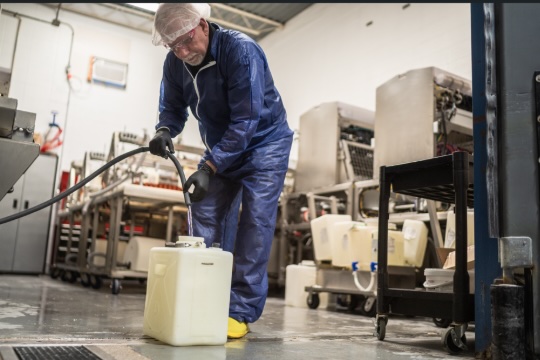
Hygiene practices and sanitation cannot be overstated in the hatchery, especially not in the spirit of saving time. To expand on this misperception, Love recalled another European case study. To save time, hatchery personnel began running two AM cleaning cycles rather than completing both the recommended AM and PM cleaning sequences. The PM cycle includes detergent designed to remove organic material that sanitizers alone cannot penetrate. Without it, biological debris accumulated on equipment, increasing contamination risks and contributing to higher late-embryo mortality.
Retraining employees, restoring proper cleaning procedures and reducing the use of floor eggs returned hatchability and chick quality to expected levels.
Looking beyond the equipment
All these examples point to a common takeaway: Reliable in ovo vaccination outcomes depend on reliable processes surrounding it.
Routine process evaluations, employee certification, equipment maintenance and quality control provide hatcheries with opportunities to identify risks before they affect flock performance. These activities also become increasingly valuable as labor shortages and workforce turnover create knowledge gaps within hatchery operations. Separating fact from fiction is ultimately about helping hatcheries maximize one of their largest bird health investments. When vaccines are supported by disciplined processes, trained personnel and continuous technical guidance, hatchery managers are setting a solid foundation for flock health and hatchery performance.
Disclaimer: The case studies presented are for illustrative purposes only. They are based on generalized scenarios and do not necessarily reflect the experiences of actual customers.
Related posts






About Zoetis
Zoetis is the world’s leading animal health company, driven by a singular purpose: to nurture our world and humankind by advancing care for animals. With a legacy of nearly 75 years, Zoetis continues to pioneer ways to predict, prevent, detect, and treat animal illness, supporting veterinarians, livestock producers, and pet owners in over 100 countries. We integrate deep scientific expertise, data-driven R&D, advanced manufacturing, and commercial excellence to deliver meaningful innovation across medicines, vaccines, diagnostics, biopharmaceuticals, and digital solutions. Guided by our vision to be the most trusted and valued animal health company, Zoetis is committed to setting new standards for the future of animal care through innovation, customer obsession, and purpose-driven colleagues. To learn more, visit Zoetis.com.