

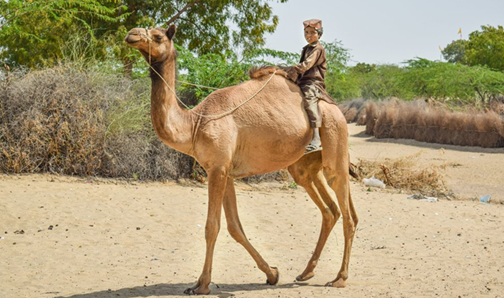
Camel breeding in Pakistan is deeply shaped by geography, closely aligned with the country’s vast arid and semi-arid landscapes. From the deserts of Sindh and southern Punjab to the expansive rangelands of Balochistan and parts of southern Khyber Pakhtunkhwa, camels thrive in environments where other livestock struggle to survive. For pastoral and agro-pastoral communities living in these regions, camels are far more than livestock they represent a way of life, a dependable source of income, and a form of security against recurring environmental shocks such as drought and resource scarcity.
In Sindh, camel rearing is deeply embedded in both desert and coastal ecosystems. Districts such as Tharparkar, Umerkot, Badin, Thatta, and Sujawal have long-standing traditions of camel husbandry. The Thari camel, in particular, is well known for its resilience, ability to endure prolonged dry spells, and relatively high milk production. In these regions, camels are also used for transportation and carting, especially in areas where mechanized transport is either unavailable or unaffordable. 
During periods of drought, when other livestock often perish, camels continue to provide milk, making them a crucial lifeline for local communities.Balochistan holds the largest share of Pakistan’s camel population. In districts such as Chagai, Kharan, Nushki, Washuk, Panjgur, and Awaran, camels form the backbone of livelihoods for nomadic and semi-nomadic populations.Breeds like the Kohi and Brahvi are valued for their endurance, long-distance mobility, and suitability for meat production. In a province marked by vast distances and limited infrastructure, camels continue to perform essential economic, logistical, and cultural roles that modern alternatives have yet to fully replace.
In Punjab, camel breeding is concentrated in the Cholistan and Thal desert regions. Districts including Bahawalpur, Rahim Yar Khan, Bahawalnagar, Layyah, and Muzaffargarh serve as key centers of camel rearing. The Cholistani camel is one of the most recognized breeds in Pakistan, known for its strength, adaptability, and historical role in transport and agriculture. Today, however, these camels are increasingly raised for meat production and for sale during religious occasions, particularly Eid-ul-Azha, when demand rises sharply.
Camel markets across Pakistan largely operate outside formal regulatory systems. Trade is seasonal and often linked to religious events, especially Eid-ul-Azha. Rural livestock markets, or mandis, act as primary collection points where breeders sell their animals to middlemen.Camel meat, once considered a marginal food product, is gradually gaining acceptance in urban markets, particularly in Karachi and Quetta. It is lean, rich in protein, and lower in cholesterol compared to beef, making it an appealing option for health-conscious consumers. Despite these advantages, the growth of the camel meat sector is constrained by the lack of organized supply chains, hygienic slaughtering facilities, and branding strategies. Camel milk, despite its exceptional nutritional and medicinal properties, remains significantly underutilized. It is rich in vitamin C, iron, potassium, and contains insulin-like proteins that may support diabetes management. In desert regions such as Thar and Cholistan, camel milk is widely consumed and valued for its health benefits. However, due to the absence of cold storage systems, processing infrastructure, and commercial marketing, it has not yet penetrated mainstream dairy markets.Beyond milk and meat, camels also provide valuable by-products. Camel hair is durable and heat-resistant, commonly used in making blankets, ropes, tents, and rugs. Camel skin is thick and long-lasting, suitable for producing traditional items such as shoes, bags, belts, and handicrafts. Yet, these by-products remain underdeveloped due to the lack of modern processing and value-addition industries.
Economically, camels represent a significant asset. Prices vary depending on breed, age, and purpose, ranging from approximately Rs150,000 for younger animals to over Rs2 million for premium camels during Eid-ul-Azha. Despite this strong market value, the sector continues to face structural neglect. There are no dedicated camel breeding farms, veterinary outreach is limited, disease surveillance systems are weak, and pastoral communities have minimal access to credit, insurance, and formal markets.Pakistan’s camel sector also holds considerable export potential, particularly in Middle Eastern markets where demand for camel meat and milk is high. However, this opportunity remains largely untapped due to the absence of quarantine facilities, traceability systems, and export-grade processing infrastructure. As climate change intensifies and water scarcity becomes more severe, camels offer a highly practical and climate-resilient livestock solution. Their ability to survive and remain productive under harsh environmental conditions makes them increasingly valuable for sustainable livelihoods. Recognizing camels as a strategic asset, investing in value chains, strengthening veterinary services, and integrating pastoral communities into formal markets could unlock significant economic and social benefits.
In regions such as Tharparkar, Cholistan, and Balochistan, camels are not remnants of a fading past but vital assets for the future. Strengthening this sector can enhance food security, support rural economies, and contribute to a more resilient and sustainable livestock system in Pakistan.
Related posts