
• About us
  • Advertise with us
  • Subscribe Now
  • Media Kit
Sunday, December 7, 2025
Livestock & Poultry Middle East
Text in HTML
MIDDLE EAST'S HIGHEST
CIRCULATING LIVESTOCK &
POULTRY MAGAZINE WITH PRINT & ONLINE READERSHIPS
  • Home
  • News
  • Videos
  • Industry Update
    • Animal Feeds & Nutrition
    • Dairy Products
    • Farming Equipment
    • Animal Health & Hygiene
    • Aquaculture
    • Livestock Farming
    • Meat & Processing
    • Poultry Farming
  • Country Update
  • Digital Magazines
    • Publications
  • Events
  • Careers
  • Contact Us
No Result
View All Result
  • Home
  • News
  • Videos
  • Industry Update
    • Animal Feeds & Nutrition
    • Dairy Products
    • Farming Equipment
    • Animal Health & Hygiene
    • Aquaculture
    • Livestock Farming
    • Meat & Processing
    • Poultry Farming
  • Country Update
  • Digital Magazines
    • Publications
  • Events
  • Careers
  • Contact Us
No Result
View All Result
Live Stock Middle East
No Result
View All Result
Home News

The tension between feed analysis and biomarkers in mycotoxin risk assessment

by Livestock & Poultry News Desk
2 years ago
in News
0
The tension between feed analysis and biomarkers in mycotoxin risk assessment
ShareShareShareShareShare

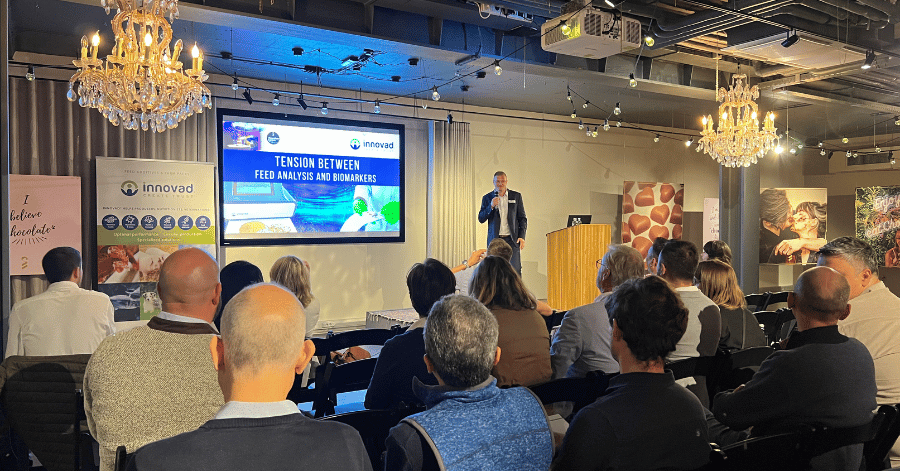
Innovad opened the discussion on mycotoxin risk assessment and the tension between feed analysis and biomarkers. Up to now, raw material and feed analysis have been the sole tool used to evaluate mycotoxin exposure. In consequence, legislative organizations around the world established maximum limits of mycotoxins only in raw materials and feed. This includes just a handful of mycotoxins, based on research of single toxin exposure doses on animal health and performance. However, the real impact of mycotoxins on animal performance, the synergistic effect of multi-toxin exposure and the efficacy of different types of products, are hard to evaluate. Mycotoxin feed limits have not been questioned that much due to the lack of alternatives. 

In recent years animal tissue – and especially blood – analysis on mycotoxins has resulted in biomarkers that are correlated to the level of exposure to specific mycotoxins. How to correlate these analyses to animal health and performance is still under development but first attempts seem to be very powerful as an approach to address mycotoxin challenges. The clear cut-off feed limits create tension with the interpretation of blood analysis of multiple mycotoxins as there is not a straight correlation.

Challenging established mycotoxin limits (by Mr. Frans Verstraete)

Frans Verstraete, Directorate-General for Health & Food Safety at the European Commission, reviewed the existing limits. In Europe, maximum levels are only established for aflatoxins and ergot alkaloids (Directive 2002/32/EC), while guidance and indicative levels are set up for deoxynivalenol, zearalenone, fumonisins, ochratoxin A (2006/576/EC) and T-2 (2013/165/EU). The existing mycotoxin limits for complete feed mainly guarantee food safety and human health, but they may cause adverse animal health effects. Mr. Verstraete also introduced the main obstacles regarding established mycotoxin levels like proportion of use of a certain product for feed in comparison with the total production or the bioavailability of mycotoxins in a certain feed material. On the other hand, regulating mycotoxins is facing some challenges like the increased prevalence caused by climate change and the availability of analytical methods. Finally, Mr. Verstraete also commented on the importance of mycotoxin detoxifier as a crucial tool to improve the quality of the feed and provide additional guarantees for animal protection, especially when there is co-exposure to several mycotoxins. However, the use of such products may not result in an increase of maximum levels.

Biomarkers as game-changers (by Prof. Siska Croubels)

Professor Siska Croubels from the Faculty of Veterinary Medicine of Ghent University has been extensively working with mycotoxin biomarkers and their applications in animals being recognised as a leading researcher in this field. Professor Croubels emphasizes that feed and raw material analysis can help to control mycotoxin risk in feedmills, but the inhomogeneity distribution of mycotoxins in bulks cause a huge error on exposure assessment. Furthermore, chronic exposure at realistic levels, below established limits, causes several disturbances reducing performances on farm.

Alternatively, biomarkers analysis has emerged as a more accurate technique to evaluate the true mycotoxin risk in the animal, although limits have not been established yet by authorities. Thanks to well defined toxicokinetic profiles (absortion, distribution, metabolism and excretion (ADME)), mostly obtained in studies headed by Prof. Croubels, it is now possible to elucidate mycotoxin risk through biomarker analysis. Taking into account all this information, mycotoxin biomarkers analysis has already been successfully applied to evaluate the impact of mycotoxins on animal health. For example, a correlation between deoxynivalenol biomarker analysis in blood and tail necrosis in  established (Van Limbergen et al., 2017). Additionally, mycotoxin biomarkers should also be implemented to demonstrate mycotoxin detoxifier efficacy in vivo, as European Food Safety Authority (EFSA) recommends (EFSA Journal 2010: 8(7): 1693).

Prof. Croubels points out that concentrations below established levels in feed (“realistic values”) cause an array of disturbances that reduce performance. The application of mycotoxin biomarkers has enormous added value to improve diagnosis and mitigation. Thus, the extensive application of biomarker analysis on farms allows the construction of large data sets to apply the necessary holistic approach and understand the different interactions with management, microbiota, gut health, immune system, and so on.

Our key takeaways

In conclusion, the event underscored that current mycotoxin limits established in feed ensure food safety, but fall short in guaranteeing animal health. Moreover, the established mycotoxin levels face obstacles such as changeable bioavailability in the different feed materials. Extensive research in recent years has demonstrated the added value of the application of mycotoxin biomarkers on farms for their diagnosis and mitigation. Biomarkers databases can provide the holistic approach needed to understand complex interactions with multi-environment factors and improve animal performance.

  1. Established mycotoxin limits in feed do not guarantee animal health. 
  2. Biomarker analysis proves superior in evaluating mycotoxin risk. 
  3. Mycotoxin detoxifiers play a crucial role to protect livestock. 
  4. Biomarker databases provide an holistic approach to improve animal performance. 
Post Views: 1,716

Related posts

Cobb Strengthens Veterinary Team with Addition of Dr. Montana Oubre

Cobb Strengthens Veterinary Team with Addition of Dr. Montana Oubre

December 4, 2025
Orffa Introduces a New Brand Promise, Underscoring Its Increasing Focus On Science-Driven Specialization in Global Animal Production.

Orffa Introduces a New Brand Promise, Underscoring Its Increasing Focus On Science-Driven Specialization in Global Animal Production.

December 1, 2025
VIV MEA 2025 Concludes Successfully: A Global Gateway Driving Food Security and Innovation in the MENA Region

VIV MEA 2025 Concludes Successfully: A Global Gateway Driving Food Security and Innovation in the MENA Region

November 28, 2025
Poultry India Expo 2025 Opens With Strong Global Participation

Poultry India Expo 2025 Opens With Strong Global Participation

November 26, 2025
VIV MEA 2025 Opens in Abu Dhabi, Showcasing Global Innovations in Animal Protein Production

VIV MEA 2025 Opens in Abu Dhabi, Showcasing Global Innovations in Animal Protein Production

November 25, 2025
VIV MEA 2025 Returns to Abu Dhabi as the Region’s Premier Platform for Agricultural Innovation and Food Security

VIV MEA 2025 Returns to Abu Dhabi as the Region’s Premier Platform for Agricultural Innovation and Food Security

November 24, 2025
ShareShareTweetSendPin
Previous Post

EMEAA Broiler School Enhances Broiler Management Focus

Next Post

More than $3 million earned through 2023 by dairy producers for carbon projects initiated with Agolin in 2021 and 2022

Next Post
More than $3 million earned through 2023 by dairy producers for carbon projects initiated with Agolin in 2021 and 2022

More than $3 million earned through 2023 by dairy producers for carbon projects initiated with Agolin in 2021 and 2022

July-Sept 2025 edition

RECOMMENDED NEWS

“FarmRobotix” celebrates premiere at the DLG Feldtage 2024 event

“FarmRobotix” celebrates premiere at the DLG Feldtage 2024 event

2 years ago
NOVUS Shares How to Get More From Feed at Western Dairy Management Conference

NOVUS Shares How to Get More From Feed at Western Dairy Management Conference

8 months ago
VIV Asia 2025 wraps up: A landmark event showcasing industry excellence and market leadership

VIV Asia 2025 wraps up: A landmark event showcasing industry excellence and market leadership

9 months ago
HAMLET PROTEIN GOLD SPONSOR OF INTERNATIONAL FEED INGREDIENTS COURSE

HAMLET PROTEIN GOLD SPONSOR OF INTERNATIONAL FEED INGREDIENTS COURSE

3 weeks ago

FOLLOW US

BROWSE BY CATEGORIES

  • Animal Feeds & Nutrition
  • Animal Health & Hygiene
  • Aquaculture
  • Country Update
  • Dairy Products
  • Draft
  • Editor's Pick
  • Events News
  • Farming Equipment
  • Industry Update
  • Livestock Farming
  • Meat & Processing
  • Media Kit
  • News
  • Poultry Farming
  • Sponsored News
  • Video

BROWSE BY TOPICS

Adnec Al Ain alltech animal animal biosolutions Animal nutrition brenntag calves chickens cow health DAIRY dsm egg eggprocessing Equestrian event farming fee feed feed ingredients fish health HOOVES horse horse feed Hunting insect farming Ishida livestock marel meat processing middle east milk production Novonesis Novus petfood poultry poultry feeds poultry line poultry production shrimp sommet swine Thumbay veterinary clinic
Livestock & Poultry Middle East

Leading Livestock & Poultry Industry Magazine in the Gulf & Middle East Region

Follow us on social media:

Recent News

  • Cobb Strengthens Veterinary Team with Addition of Dr. Montana Oubre
  • Orffa Introduces a New Brand Promise, Underscoring Its Increasing Focus On Science-Driven Specialization in Global Animal Production.
  • VIV MEA 2025 Concludes Successfully: A Global Gateway Driving Food Security and Innovation in the MENA Region
  • Gulfood Manufacturing 2025 Marks a Landmark Year, Cementing UAE’s Role as the Global Crossroads for F&B Manufacturing and Trade

Category

  • Animal Feeds & Nutrition
  • Animal Health & Hygiene
  • Aquaculture
  • Country Update
  • Dairy Products
  • Draft
  • Editor's Pick
  • Events News
  • Farming Equipment
  • Industry Update
  • Livestock Farming
  • Meat & Processing
  • Media Kit
  • News
  • Poultry Farming
  • Sponsored News
  • Video

Recent News

Cobb Strengthens Veterinary Team with Addition of Dr. Montana Oubre

Cobb Strengthens Veterinary Team with Addition of Dr. Montana Oubre

December 4, 2025
Orffa Introduces a New Brand Promise, Underscoring Its Increasing Focus On Science-Driven Specialization in Global Animal Production.

Orffa Introduces a New Brand Promise, Underscoring Its Increasing Focus On Science-Driven Specialization in Global Animal Production.

December 1, 2025
  • About us
  • Advertise with us
  • Subscribe Now
  • Media Kit

© 2025 LIVESTOCK & POULTRY ME & ASIA

No Result
View All Result
  • Home
  • News
  • Videos
  • Industry Update
    • Animal Feeds & Nutrition
    • Dairy Products
    • Farming Equipment
    • Animal Health & Hygiene
    • Aquaculture
    • Livestock Farming
    • Meat & Processing
    • Poultry Farming
  • Country Update
  • Digital Magazines
    • Publications
  • Events
  • Careers
  • Contact Us

© 2025 LIVESTOCK & POULTRY ME & ASIA

Cleantalk Pixel

Subscribe to our newsletter and online magazine

Subscription Form -pop up